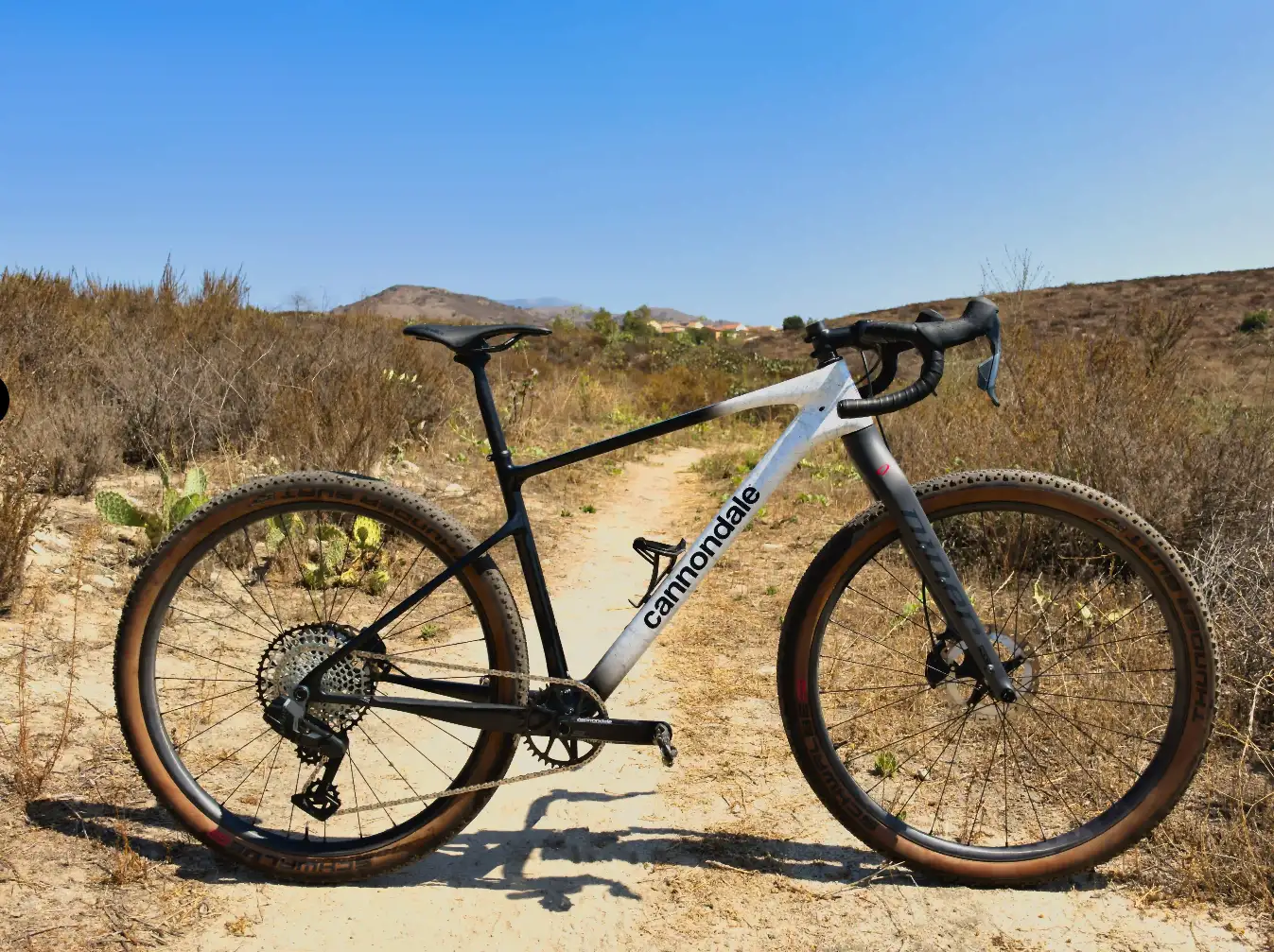
Buying a gravel bike in 2026 is harder than it should be. The category covers everything from aero race bikes to drop-bar hardtails, the drivetrain standards changed in the last two years, and a “50mm” tire can measure 54mm depending on the rim. This page pulls together everything I’ve written on the subject, in the order I’d think about it if I were buying today.
1. Start with tire clearance
Tire clearance decides more about what a gravel bike can do than any other spec. It sets the terrain the bike can handle, how comfortable it is, and how much room you have when it gets muddy. Most current race frames clear 50mm or more. Older frames and some fast, road-like gravel bikes stop at 45mm.
- Gravel Bike Tire Clearance Chart 2026: max tire size for current frames, side by side.
- Gravel Bike Tire Clearance: Real-World vs Spec: how far past the official number a Specialized Crux actually goes.
- Rim Width vs Tire Width: my measurements of how much a wide rim adds to tire width, and why that matters for clearance.
2. Check the dropout before you pick a drivetrain
If you want SRAM’s 13-speed XPLR, the frame needs a UDH dropout, and there’s no adapter for one that doesn’t have it. This is the most common trap I see with used bikes and older framesets. Shimano GRX doesn’t have this restriction.
- Will SRAM 1x13 XPLR Fit Your Gravel Bike?: how to tell from photos or the spec sheet.
- UDH Gravel Bikes: Every Frame on SRAM’s List: the full compatibility list.
3. Choose your gearing
1x is now the default for gravel, but 2x still makes sense if you ride a lot of pavement or group rides. The real choice is between tight steps between gears and a really easy low gear.
- SRAM 13-Speed vs Shimano GRX 12-Speed for Gravel: gearing, frame requirements, weight and US prices.
- Specialized Crux Build: Shimano XTR Di2 + 105 Di2 1x: my build with a mountain bike 10-51 cassette and road Di2 levers.
- MTB to Gravel Conversion: Garbaruk 10-52 13-Speed Build: the widest-range 13-speed setup I’ve run.
4. Pick the bike
If you want a gravel race bike, the Specialized Crux 5 and the new Canyon Grail are the two to compare first, and the Ridley Kanzo Fast 2.0 is the one that might beat both. If your riding is rough enough that a rigid bike beats you up, look at drop-bar hardtails and full suspension bikes too.
- Specialized Crux 5 vs Grail, Kanzo Fast and Kaius: my verdict on which current race bike is best.
- Specialized Crux 5 and New Canyon Grail (2027): the launch details.
- 2025 Cannondale SuperX Review: if you want one bike for gravel and cyclocross.
- Best Hardtail and Drop Bar Full Suspension Gravel Bikes: for rough terrain.
- Hardtail Gravel Conversion: Cannondale Scalpel HT Build and the drop bar conversion parts list: if you’d rather build one from a mountain bike.
- Crux 5 vs Road Bike: whether a fast gravel bike can replace your road bike.
5. Wheels
Wide internal rims are the trend, and they do help tire shape and stability, but they also make your tires measurably wider. Factor that into clearance before you buy.
- ENVE G SES vs Zipp 303 XPLR: specs, internal width, pricing and who each wheel suits.
- ENVE G SES 4.5 Pro and 6.7 Pro: ENVE’s widest gravel wheels yet.
6. Tires and pressure
Tires change how a gravel bike rides more than any other upgrade, and pressure matters almost as much as the tire itself.
- Best Gravel Tires for Mixed Pavement and Dirt: my picks, with lab rolling-resistance data.
- Gravel Tire Pressure Chart by Rider Weight and Width: starting pressures, plus how rim width and hookless limits change them.
- Gravel Tire Price Tracker: daily prices and 90-day lows, so you can tell when a sale is real.
- I Put 2.35" MTB Tires on My Drop Bar Gravel Bike: what happens at the far end of the tire-size range.
Where gravel is heading
New gravel race bikes keep getting more aero and more road-like, and I’m not sure that’s what most riders need. I wrote about that in Gravel Bikes Keep Getting Faster. Did Anyone Ask?, and about why 32-inch wheels may make more sense for gravel than XC.
I update this page whenever I publish something new on gravel, so it’s a good one to bookmark.