If you’ve been shopping for a gravel bike recently — new or used — you’ve probably run into the term UDH and wondered whether it matters for what you’re building. The short answer is: it depends on what groupset you want to run. The longer answer is that a lot of popular gravel frames have had their dropouts quietly updated mid-generation, which means two bikes with the same name and similar looks can have very different futures when it comes to drivetrain compatibility.
This came up recently when I was looking at used Specialized Crux listings. There are early-generation Cruxes and updated ones on the market right now, and the dropout is one of the key things that separates them. Let me break down what UDH actually is, why it matters specifically for SRAM’s 13-speed XPLR ecosystem, and what to look for before you buy.
What Is UDH?
UDH stands for Universal Derailleur Hanger, and it’s a dropout standard that SRAM developed originally for mountain bikes. The idea was straightforward: instead of every frame manufacturer using a proprietary hanger shape — leading to a fragmented mess of hundreds of incompatible replacement hangers — there would be one standardized interface that any brand could build into their frames.
Beyond the compatibility and parts-availability benefits, the UDH design itself is an improvement over traditional hangers. It’s physically beefier, it’s designed to deflect backwards in an impact rather than snap, and it includes a small hook that catches a dropped chain before it jams between the cassette and the frame — a particularly useful feature on carbon bikes where that kind of jam can do real damage.
For a while, UDH was mostly a mountain bike thing. Then SRAM launched its 13-speed Red XPLR AXS gravel groupset in 2024, and suddenly UDH became a gravel conversation too.
Why SRAM’s 13-Speed XPLR Requires It
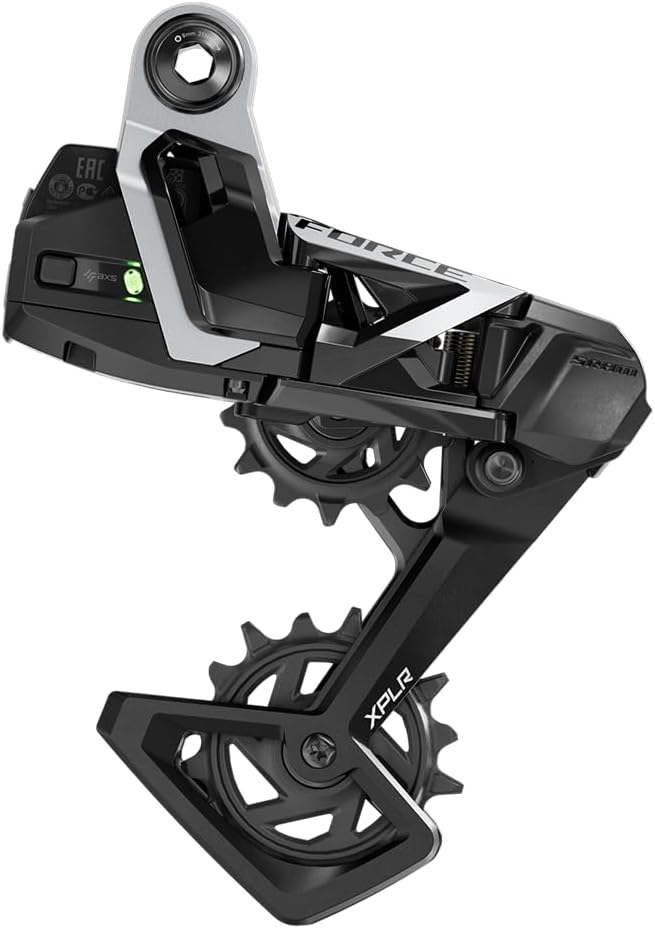
The reason UDH matters specifically for SRAM’s 1x13 gravel setup comes down to how the rear derailleur mounts to the frame. SRAM’s XPLR 13-speed derailleurs use what SRAM calls Full Mount — the derailleur attaches directly to the frame using the UDH interface, bypassing the traditional hanger entirely. The hanger is removed, the derailleur bolts straight into the dropout, and the result is a more direct, stiffer connection that improves shifting precision and reduces the number of parts that can bend, break, or misalign.
This is the same architecture SRAM uses for its T-Type Eagle Transmission mountain bike drivetrains. It works extremely well. But it means your frame must be built around the UDH standard — there’s no adapter, no workaround, no converting a traditional dropout. If the frame doesn’t have UDH geometry in the dropout, SRAM’s 13-speed XPLR simply won’t fit.
It’s worth noting that UDH is backwards compatible in the other direction. A frame with UDH can still run any conventional rear derailleur — Shimano GRX, SRAM’s older 12-speed AXS, Campagnolo Ekar — using a standard UDH hanger. So having UDH on your frame doesn’t lock you into anything; it just opens additional doors. A frame without UDH, however, is locked out of the Full Mount 13-speed ecosystem entirely.
The Crux Is the Perfect Case Study
The Specialized Crux is the clearest example of a popular gravel frame that exists in both UDH and non-UDH versions on the used market, and the distinction isn’t obvious from a photo or a casual listing description.
The current Crux generation launched in 2021 as a significant redesign — it went from a cyclocross-leaning platform to a proper race gravel bike with wide tire clearance and aggressive geometry. That original 2021 design did not have UDH. Specialized then made rolling changes to the dropout design, and the 2025 model year brought UDH compatibility across the range: the alloy Crux DSW got it first, followed by the carbon S-Works Crux later that year. Specialized was explicit about it in their customer documentation, noting that 2025 and newer Crux models have been redesigned for the SRAM UDH and are compatible with SRAM Transmission.
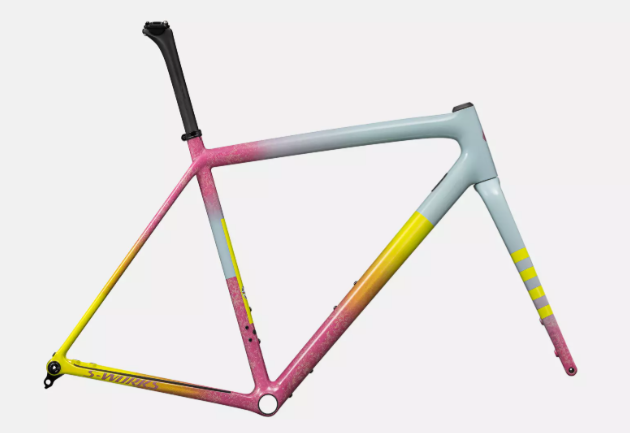 2025 S-Works Crux — the first carbon Crux generation with UDH. Photo: Specialized
So if you’re shopping a used Crux and the seller says it’s a 2022, 2023, or 2024 carbon model, assume it doesn’t have UDH unless you can verify otherwise. A 2025 or newer should have it. The practical implication is that the older frame is a perfectly capable race-oriented gravel bike, but you’re limited to 12-speed SRAM AXS or Shimano GRX — you won’t be able to run a 13-speed Full Mount setup without a frame swap.
Other Frames That Made the Switch
The Crux isn’t alone. A number of gravel brands have gone through the same mid-generation UDH transition, which makes the used market a bit of a minefield if you’re not paying attention.
Moots went through this with their titanium gravel lineup. Their Routt CRD was the first to get UDH in July 2023, followed by the Womble, Mountaineer, and Forager in early 2024, and the Routt 45 and Routt YBB in late 2024. If you’re shopping a used Moots gravel frame, the build date matters significantly. To their credit, Moots published a detailed explanation of the transition and the engineering challenges involved — titanium dropouts require asymmetric material removal to accommodate the UDH geometry, which isn’t trivial to get right.
On the Canyon side, the Grail CFR and Endurace CFR that I’ve written about here both carry UDH, as does a growing number of their current gravel lineup. Canyon has been aggressive about adopting current standards, which is one of the things that makes their bikes a reasonable value even at high price points — you’re not buying into obsolescence.
BMC’s Kaius, the Giant Revolt in its current generation, and ENVE’s MOG also have UDH. But again — an older Revolt or a pre-update BMC frame may not.
Which frames have UDH?
The list is longer than you might expect — over 70 gravel frames from more than 30 brands are currently confirmed UDH-compatible. Rather than bury a long table in this post, we’ve put together a dedicated reference: UDH-Compatible Gravel Bikes: Every Frame on SRAM’s List (May 2026).
The short version of the most commonly shopped bikes: Trek Checkpoint (Gen 3), Specialized Crux (2025+), Canyon Grail CF (current gen), Cannondale SuperX and Topstone Carbon, BMC Kaius, Cervelo Aspero, Scott Addict Gravel, Orbea Terra, and ENVE MOG all have UDH. The Giant Revolt notably does not, as of mid-2026.
Worth noting: that list is sourced from SRAM’s Bike Finder and reflects only frames SRAM has listed there. There are other UDH-compatible frames not on that list, particularly from smaller builders. When in doubt, ask the manufacturer directly.
What to Actually Look For When Buying
When you’re looking at a used gravel frame or complete bike, here’s how to check:
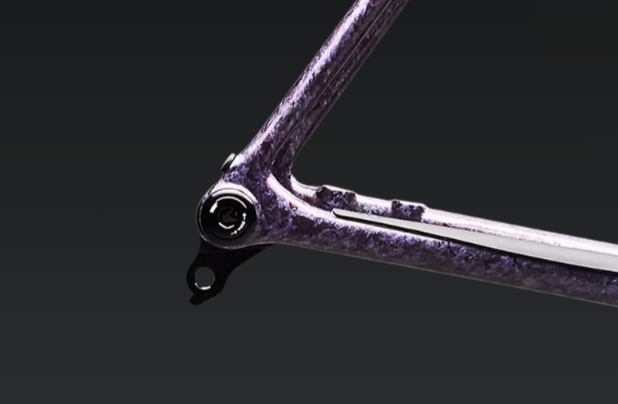
First, look at the dropout itself. This is what a traditional non-UDH dropout looks like — a thin hanger tab hanging below the axle:
 2023 S-Works Crux — traditional dropout, not UDH compatible. Photo: Specialized
And this is what a UDH dropout looks like — noticeably chunkier and more integrated into the frame:
 UDH dropout — wider, beefier interface that accepts Full Mount derailleurs directly. Photo: Specialized
If you can see a photo of the dropout area and the hanger looks like a thin, flat tab bolted below the axle, that’s a traditional design. The UDH interface will look beefier and more integrated into the dropout.
Second, check the spec sheet or frame geometry document if available. Brands that include UDH now call it out explicitly in the frame specifications — it’s a selling point they advertise. If it’s not mentioned, assume it’s not there.
Third, for Crux specifically, the model year is the clearest indicator. Pre-2025 carbon Cruxes don’t have it. If a seller isn’t sure of the model year, ask for the serial number and contact Specialized directly — they can tell you.
Fourth, ask the seller. Someone who knows their bike will know whether it has UDH. Someone who doesn’t know is a yellow flag regardless of what they’re selling.
Does It Matter If You’re Not Running 13-Speed?
If you have no plans to run SRAM’s 13-speed XPLR ecosystem, UDH still has the benefits of standardized hanger replacement and the improved crash behavior — but it’s not a dealbreaker if the frame doesn’t have it. You can run 12-speed SRAM AXS, Shimano GRX Di2, or Campagnolo Ekar on a non-UDH frame without any compromises.
Where it becomes a real issue is if you buy a non-UDH frame today planning to eventually upgrade to 13-speed. The frame will limit that upgrade path permanently. With SRAM clearly pushing 13-speed XPLR as the direction for high-performance gravel — and likely trickling the technology down to Force and Rival tiers over time — buying a non-UDH frame right now means making a deliberate choice to stay on 12-speed.
That’s not necessarily wrong. A 12-speed SRAM Force AXS or Shimano GRX Di2 setup is an excellent drivetrain. But it should be a conscious decision, not something you discover after the fact because you didn’t check the dropout before buying.
If you’re building up a gravel bike around SRAM’s 13-speed XPLR ecosystem, the rear derailleur is the key component to start with. Both of these require a UDH-compatible frame.
SRAM Red XPLR AXS Rear Derailleur — the flagship 13-speed unit, Full Mount ready.
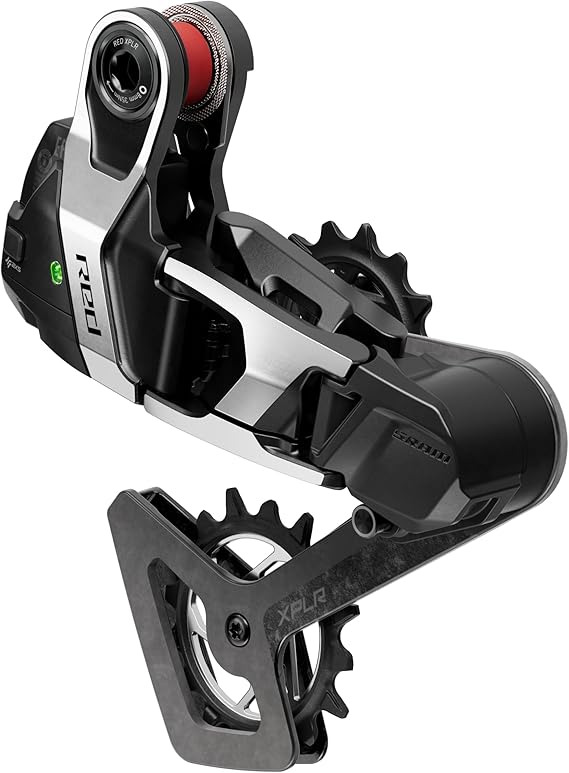
SRAM Force XPLR AXS Rear Derailleur — most of the performance at a lower price point.