The line between a gravel bike and a mountain bike has been blurring for years. But 2025 was the year it basically disappeared.
At the Leadville Trail 100, two of the top three finishers in both the men’s and women’s races were on drop bar mountain bikes — full suspension included. Keegan Swenson won on a Santa Cruz Blur with drops. Melisa Rollins podiumed on a drop-bar Liv full suspension. Dylan Johnson, the godfather of the drop bar MTB experiment, showed up on an Unno Horn with a Fox suspension fork and GRX shifters.
Then Life Time banned drop bars from Leadville for 2026. Which tells you everything about how threatening the trend had become.
If you’ve been following our hardtail gravel conversion build, you already know this territory. Here’s a broader look at the best platforms for this style of riding in 2026 — from DIY hardtail conversions to bikes purpose-built for exactly this use case.
The case for going beyond a traditional gravel bike
Standard gravel bikes top out at around 50mm tire clearance. They’re optimized for speed on mixed surfaces, not for terrain that would make a mountain biker think twice. But a lot of the most interesting riding — and racing — happens in that gap between gravel and proper trail riding.
Leadville is the clearest example. The course is 100 miles at altitude, mostly on dirt roads and doubletrack with some technical sections. It rewards aerodynamics on the climbs and descents, but also needs to handle rough terrain at speed. A traditional gravel bike is too twitchy and too limited on tires. A full-on XC race bike is fast but punishing over distance. The drop bar mountain bike sits right in the middle.
The same logic applies to bikepacking, mixed-terrain endurance events, and anyone who wants to ride singletrack on a bike that can also cover road miles efficiently.
Hardtail conversions — the DIY approach
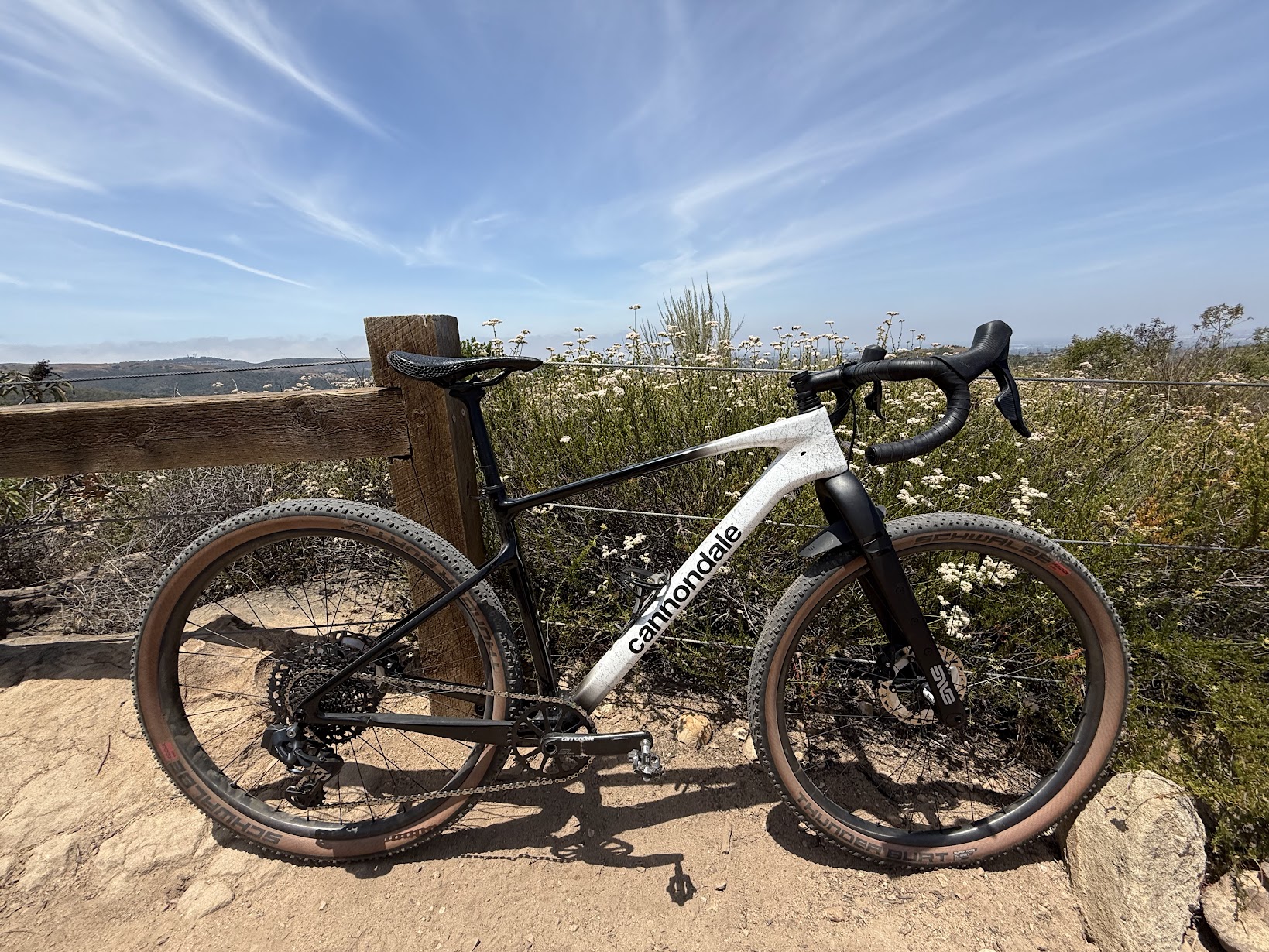
Cannondale Scalpel HT
The platform we built around here at Mizu. The Scalpel HT is a lightweight XC race hardtail with modern geometry — long reach, low stack, slack head angle — that translates well to drop bar use. It runs 29x2.2" tires with room to spare, has UDH compatibility for SRAM Transmission, and the rigid fork swap opens up the weight and handling further.
The key advantages: you’re starting with a frame engineered for efficiency and low weight, and you’re adding versatility through component choices. Run 2.2" Race Kings for Leadville-style events, or 700x47mm gravel tires for mixed-surface touring. The Scalpel HT does both.
Tire clearance: Up to 29x2.4" (suspension fork) / 29x2.2"+ (rigid fork) Geometry: Modern XC, long reach, low stack UDH: Yes Best for: Riders who want a lightweight, versatile platform they can build exactly to spec
Specialized Epic Hardtail
The other obvious choice in this category. The S-Works Epic Hardtail is one of the lightest XC hardtails available, using the same FACT 12m carbon as the full suspension Epic. Geometry is aggressive XC — maybe slightly less drop-bar friendly than the Scalpel HT’s slacker numbers, but still very capable.
The Epic HT has appeared at Leadville and similar events with drop bars, particularly in lighter builds where weight savings are the primary goal. It fits tires up to 29x2.35" and the frame is stiff and efficient in a way that rewards fast, smooth riding.
If you already own an Epic HT or can find one used, it’s an excellent conversion platform. At full retail the S-Works version is an expensive starting point for a conversion project.
Tire clearance: Up to 29x2.35" Geometry: Aggressive XC, slightly more upright than Scalpel HT Best for: Riders who prioritize weight and stiffness above everything else
Santa Cruz Highball
Worth mentioning because Keegan Swenson used a drop-bar Highball to win Leadville in 2024 before upgrading to full suspension in 2025. The Highball is Santa Cruz’s XC hardtail — carbon frame, modern geometry, fits 29x2.4" tires, and designed for the kind of fast trail riding that Leadville demands.
The Highball isn’t as widely available on Amazon, but the brand’s reputation for quality and resale value makes it a solid investment if you can find one.
Tire clearance: Up to 29x2.4" Best for: Riders who want proven Leadville-tested credentials on a hardtail
Purpose-built drop bar full suspension — the new category
Trek CheckOUT
The most significant new bike in this space. Trek released the CheckOUT in late 2025 as a purpose-built full suspension drop bar gravel bike — not a converted mountain bike, but a frame designed from the ground up for this use case.
55mm of rear travel paired with a RockShox Rudy XL 60mm fork. Fits tires up to 700x56mm or 29x2.2". Built to mountain bike durability standards but with progressive gravel geometry and a geometry stack designed for a drop bar position. Trek claims a 41.5% reduction in fatiguing vibrational energy compared to a rigid gravel bike.
The CheckOUT ships with a dropper post on all builds, which tells you what kind of terrain it’s designed for. A GRX/XT hybrid drivetrain setup makes the most of the MTB-gravel crossover intent.
This is the bike that most directly answers the question “what if I want the drop bar MTB experience without building one myself?”
Rear travel: 55mm Fork travel: 60mm (RockShox Rudy XL) Tire clearance: 700x56mm / 29x2.2" Drivetrain: Shimano GRX / XT Best for: Riders who want a purpose-built platform without the DIY conversion
Pinarello Grevil MX
Pinarello’s answer to the trend, released in January 2026. The Grevil MX is, in plain terms, the Dogma XC hardtail — the same frame that Pauline Ferrand-Prévot used to win Olympic gold in Paris — with drop bars and a 100mm Fox suspension fork.
Identical geometry to the Dogma XC: 67.75° head angle, 101mm trail. MOST Talon Ultra Light integrated cockpit. SRAM XX SL Eagle AXS drivetrain. Fits up to 29x2.35" tires. Priced at €8,500.
The catch: it’s currently only available in Europe and South Africa, not in North America or the UK. If you’re in the US, this one is a watching brief for now — but it’s worth knowing it exists because it signals where the major brands are heading with this format.
Fork travel: 100mm (Fox 32 Float Step-Cast Factory) Tire clearance: Up to 29x2.35" Price: €8,500 Best for: European riders who want the ultimate drop bar XC hardtail from a prestige brand
The twist: Leadville banned them
Here’s the irony worth noting. After drop bar mountain bikes dominated Leadville in 2025, Life Time banned them from the 2026 race — citing rider safety and course compatibility. The same bikes that proved the concept so convincingly that every major brand started building them are now excluded from the race that made them famous.
That’s not a reason to avoid the format. The ban is specific to Leadville and Little Sugar — the rest of the gravel calendar is wide open. Unbound, Crusher in the Quarry, Belgian Waffle Ride — none of these have restrictions. And for non-race use, nobody is stopping you from running whatever you want.
The ban is, if anything, a backhanded compliment. When organizers feel the need to ban something, it means it’s working.
Which approach is right for you?
Go the hardtail conversion route if you want maximum control over your build, already have a capable XC frame, or want the lightest possible setup. The Scalpel HT and Epic HT are the two best starting points.
Go purpose-built if you want a turnkey solution, don’t want to source components individually, or want rear suspension without the complexity of a full DIY build. The Trek CheckOUT is the most accessible option in 2026.
Wait and watch if you’re in North America and interested in the Pinarello Grevil MX — more brands are clearly coming into this space and options will expand.
The one thing that’s clear: this isn’t a niche experiment anymore. Drop bar mountain bikes won Leadville. Major brands are releasing purpose-built versions. And even a race ban is just evidence that the format is fast enough to threaten the establishment.
Building your own drop bar hardtail? Check out our Cannondale Scalpel HT gravel build for the full parts list and process.