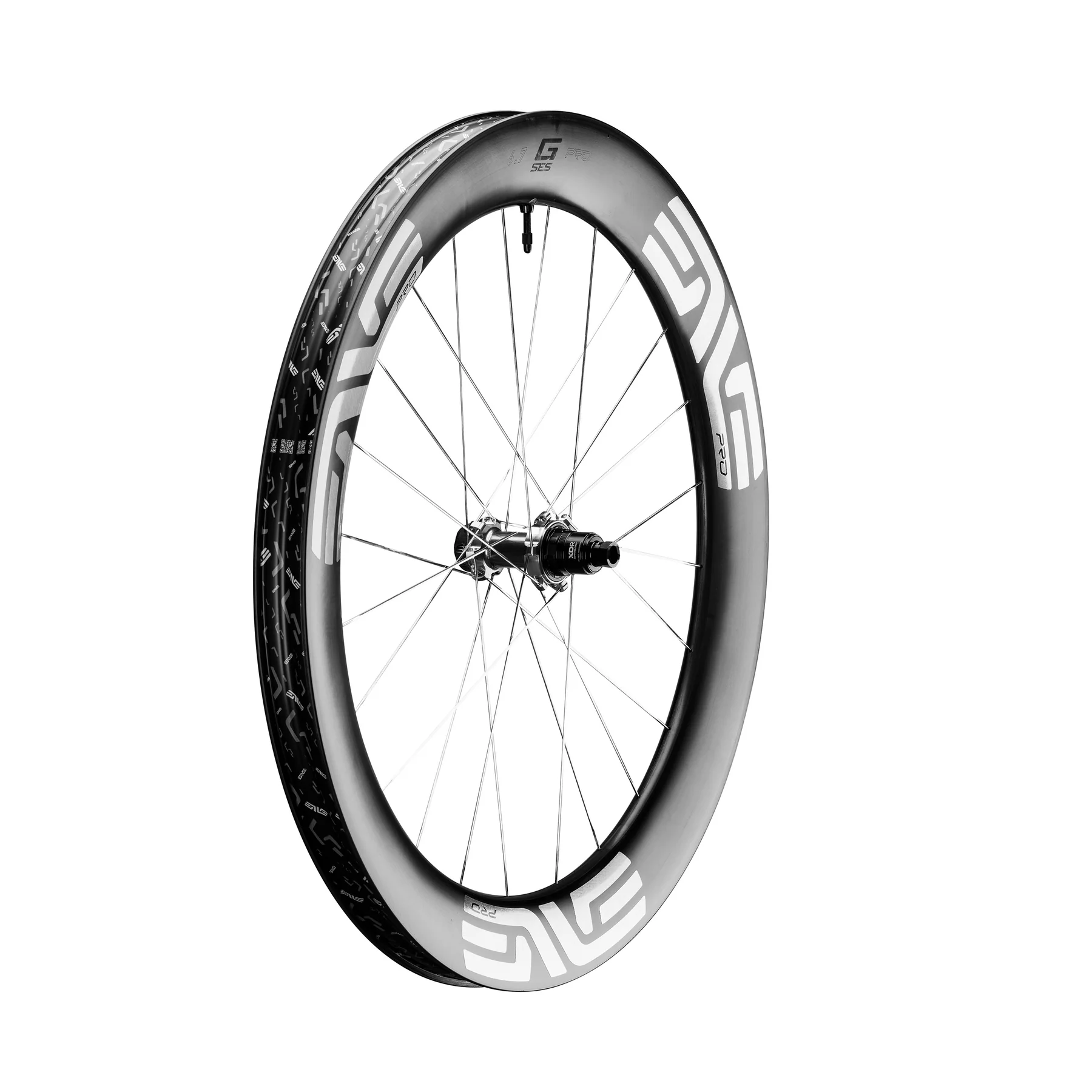
ENVE just dropped its new G SES gravel wheel lineup, and the headline spec is going to make a lot of people do a double-take: a 35mm internal rim width on the flagship 6.7 Pro. That’s wider than most mountain bike wheels from five years ago, on a gravel race wheelset. It’s a bold statement, and ENVE is clearly not interested in incremental.
The range has three wheels: the G SES 4.5, the G SES 4.5 Pro, and the G SES 6.7 Pro. Here’s what separates them.
G SES 4.5
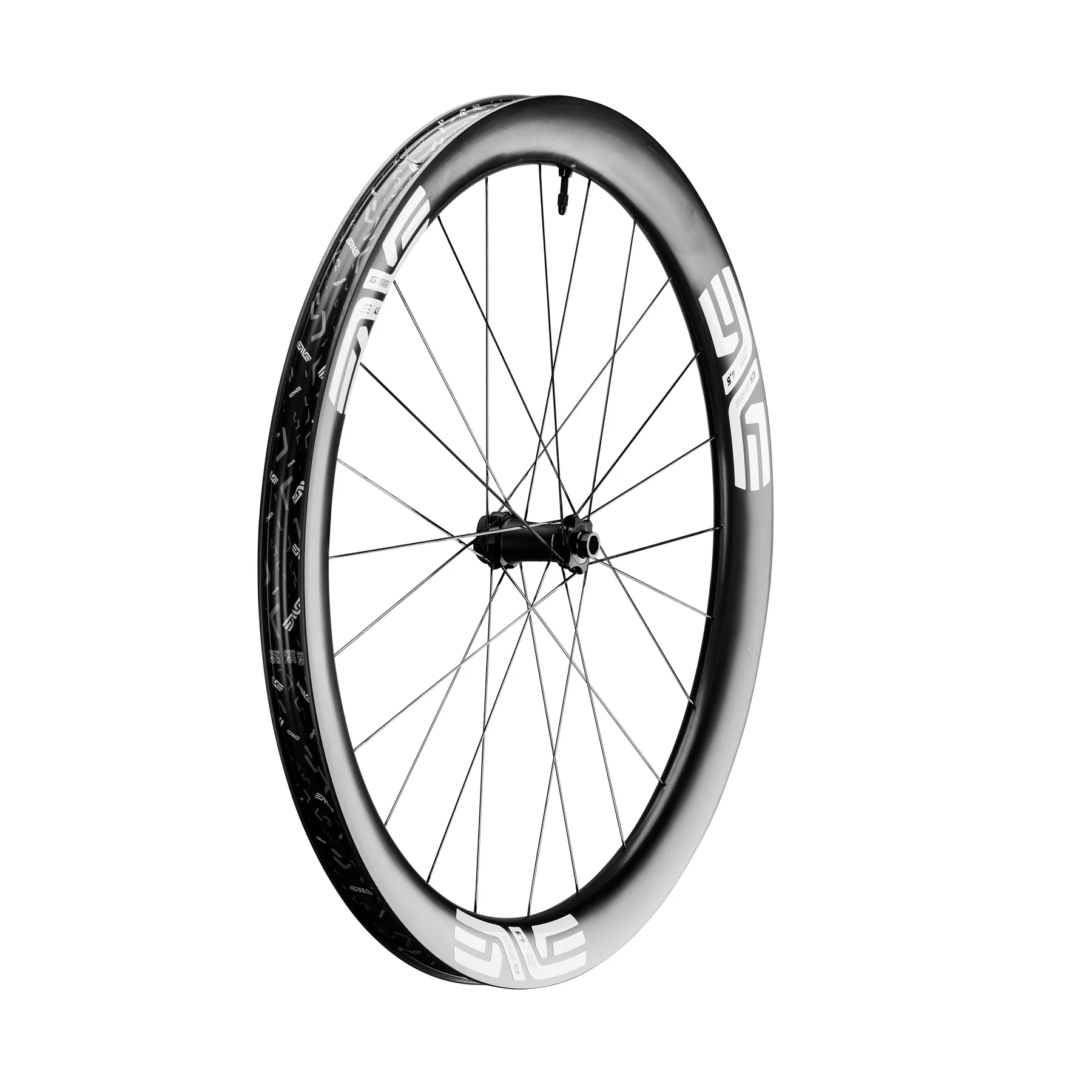
Photo: ENVE Composites
The base 4.5 is built around a 30mm internal rim width with 49mm front and 55mm rear depths. It runs Sapim CX-Ray spokes laced to ENVE’s standard 326g Innerdrive Premium hub — not the ceramic Pro version — and comes in at 1,565g claimed. Pricing is $1,250 for the front and $1,550 for the rear ($2,800 as a set). This is the one for riders who want modern rim dimensions and serious aero depth without going full race-spec.
G SES 4.5 Pro
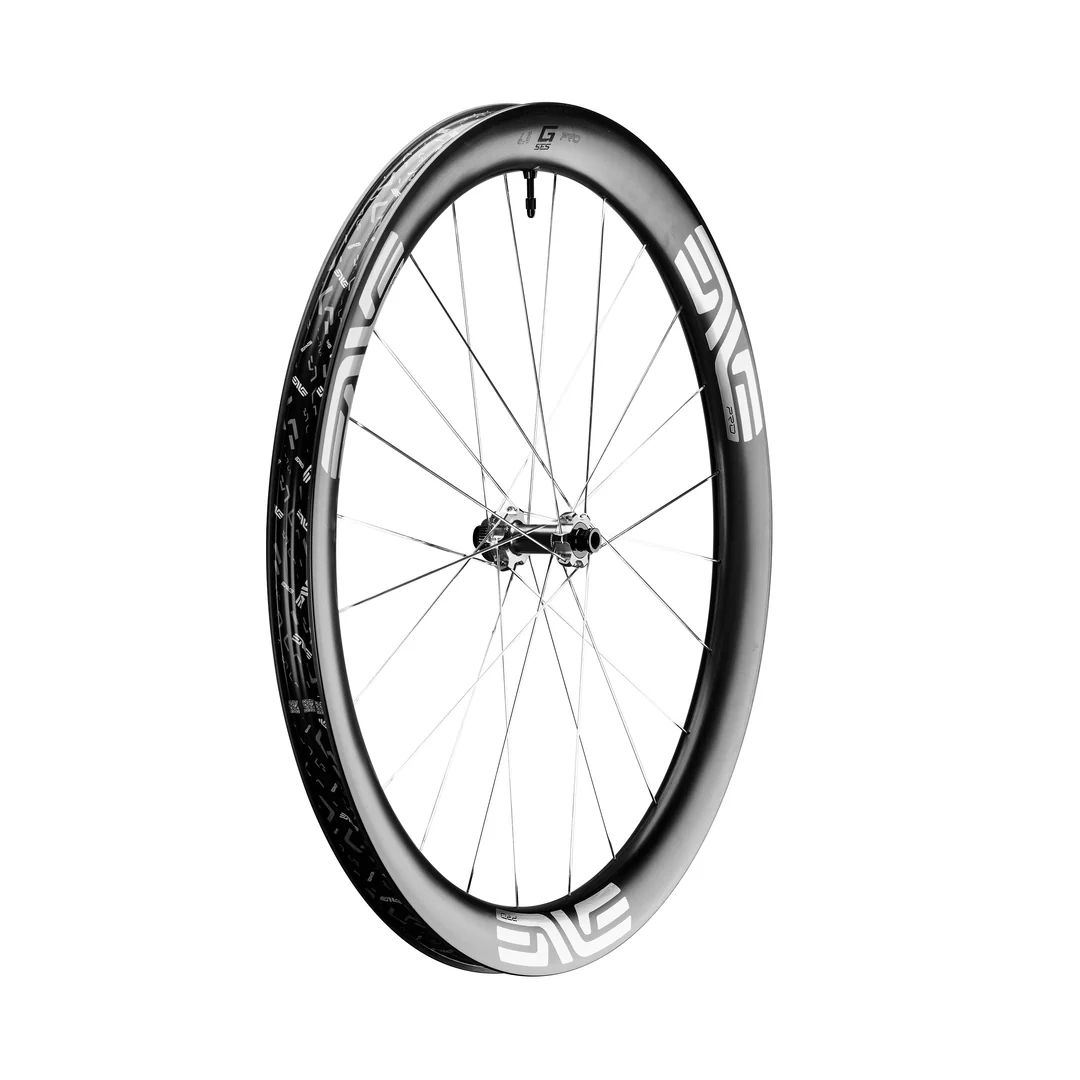
Photo: ENVE Composites
Same rims as the 4.5 — same 30mm internal width, same 49/55mm depths — but the Pro steps up to ENVE’s Innerdrive Pro hubs with ceramic bearings and Alpina Ultralite spokes. The hub swap alone saves 45g over the standard Innerdrive, and the lighter spokes pull the complete wheelset down to a claimed 1,480g, which is 85g lighter than the base 4.5. Front is $1,400, rear is $1,700 ($3,100 as a set). Same price as the 6.7 Pro, but 100g lighter and compatible with tires down to 40mm, which makes it the more versatile option of the two.
G SES 6.7 Pro

Photo: ENVE Composites
This is the one. The 6.7 Pro runs 60mm front and 67mm rear rim depths — deep enough that it’s technically illegal for UCI-sanctioned gravel events. The bigger story is the 35mm internal width, which surpasses the previous widest production gravel wheel, the Zipp 303 XPLR SW at 32mm. Claimed wheel weights are 735g front and 845g rear, with a complete wheelset at 1,580g including tape and valves. The hubs are ENVE’s Innerdrive Pro with ceramic bearings and a 40-tooth ratchet, available in Shimano HG, Micro Spline, SRAM XDR, and Campy N3W. $1,400 front, $1,700 rear — $3,100 as a set.
| G SES 4.5 | G SES 4.5 Pro | G SES 6.7 Pro | |
|---|---|---|---|
| Internal width | 30mm | 30mm | 35mm |
| Depths (F/R) | 49/55mm | 49/55mm | 60/67mm |
| Spokes | Sapim CX-Ray | Alpina Ultralite | Alpina Ultralite |
| Hubs | Innerdrive Premium | Innerdrive Pro ceramic | Innerdrive Pro ceramic |
| Wheelset weight | 1,565g | 1,480g | 1,580g |
| Min tire | 40mm | 40mm | 44mm |
| Set price | $2,800 | $3,100 | $3,100 |
The aero argument
ENVE’s case for all of this is straightforward: gravel racing has gotten faster, tires have gotten bigger, and nobody has properly optimized a rim shape around what gravel riders are actually running. Last year’s Unbound 200 was won at an average of 37.8 km/h — a speed that makes aerodynamics genuinely meaningful over unpaved roads.
The wind tunnel numbers ENVE is publishing are aggressive. Against their own baseline AG25 wheel (21mm deep, 25mm wide), the 6.7 Pro claims an 8-watt savings at 32kph and a 25-watt savings at 48kph, tested across 40, 44, and 48mm tires at multiple yaw angles. Against the Zipp 303 XPLR SW specifically, ENVE is claiming a 3.5% drag reduction advantage for the 6.7 Pro at 32kph. Take manufacturer aero data with the usual skepticism, but the underlying physics are real — wider rims do a better job of managing airflow when you’re running large-volume tires, because the tire-to-rim transition stops creating a turbulent step.
ENVE also tested with treaded and slick tires and found that tread pattern affects absolute drag numbers, but the aero advantage of the G SES rims holds consistent across both. Good news for real-world gravel use where you’re not running slicks.
The tire compatibility question
Here’s where it gets complicated. ENVE’s own data shows that when the gap between inner rim width and tire width drops below 10mm, pinch flat probability increases. That means a 44mm tire on the 35mm-wide 6.7 Pro sits right at ENVE’s own threshold — technically the minimum, not the sweet spot. The wheel really wants 47mm and up, and ideally 50mm or bigger for optimal tire shape and safety margin.
For some real-world context on what these internal widths actually mean on the bike, I tested the Zipp 303 XPLR SW against the ENVE SES 3.4 with a 50c Specialized Tracer TLR — the XPLR SW measured 32.5mm internal and produced 2–2.5mm more actual tire width compared to the 25mm ENVE rim. You can see the full width comparison in this video. The G SES 6.7 Pro’s 35mm internal takes that effect even further, so clearance on your specific frame matters a lot before you commit. If your bike maxes out at 45mm tires, the 6.7 Pro isn’t your wheel.
The 4.5 and 4.5 Pro sidestep this issue — their 30mm internal width works with tires down to 40mm, which fits the vast majority of modern gravel bikes.
What it costs and where to buy
- G SES 4.5 — $1,250 front / $1,550 rear / $2,800 set
- G SES 4.5 Pro — $1,400 front / $1,700 rear / $3,100 set
- G SES 6.7 Pro — $1,400 front / $1,700 rear / $3,100 set
All three are made at ENVE’s facility in Ogden, Utah and come with the ENVE lifetime warranty. Buy direct at enve.com.
The takeaway
ENVE isn’t hedging here. The G SES line is a direct bet that gravel racing is going to keep trending toward bigger tires, higher speeds, and equipment that looks a lot more like road racing kit than anything we saw five years ago. The 6.7 Pro in particular is a specific tool — it wants wide tires, fast courses, and a frame with clearance to match. On the right setup for the right event, the aero case is legitimate.
For most riders though, the 4.5 Pro is probably the more compelling option. It’s 100g lighter than the 6.7 Pro, works with tires from 40mm up, and shares the same ceramic Pro hub. You give up some aero at the very top end of race speeds, but you gain a wheel that actually fits a wider range of bikes and conditions. At the same $3,100 price, it’s the easier choice to justify.
The broader trend this confirms is that gravel is bifurcating. There’s fast gravel racing, and there’s everything else. ENVE just picked a side.