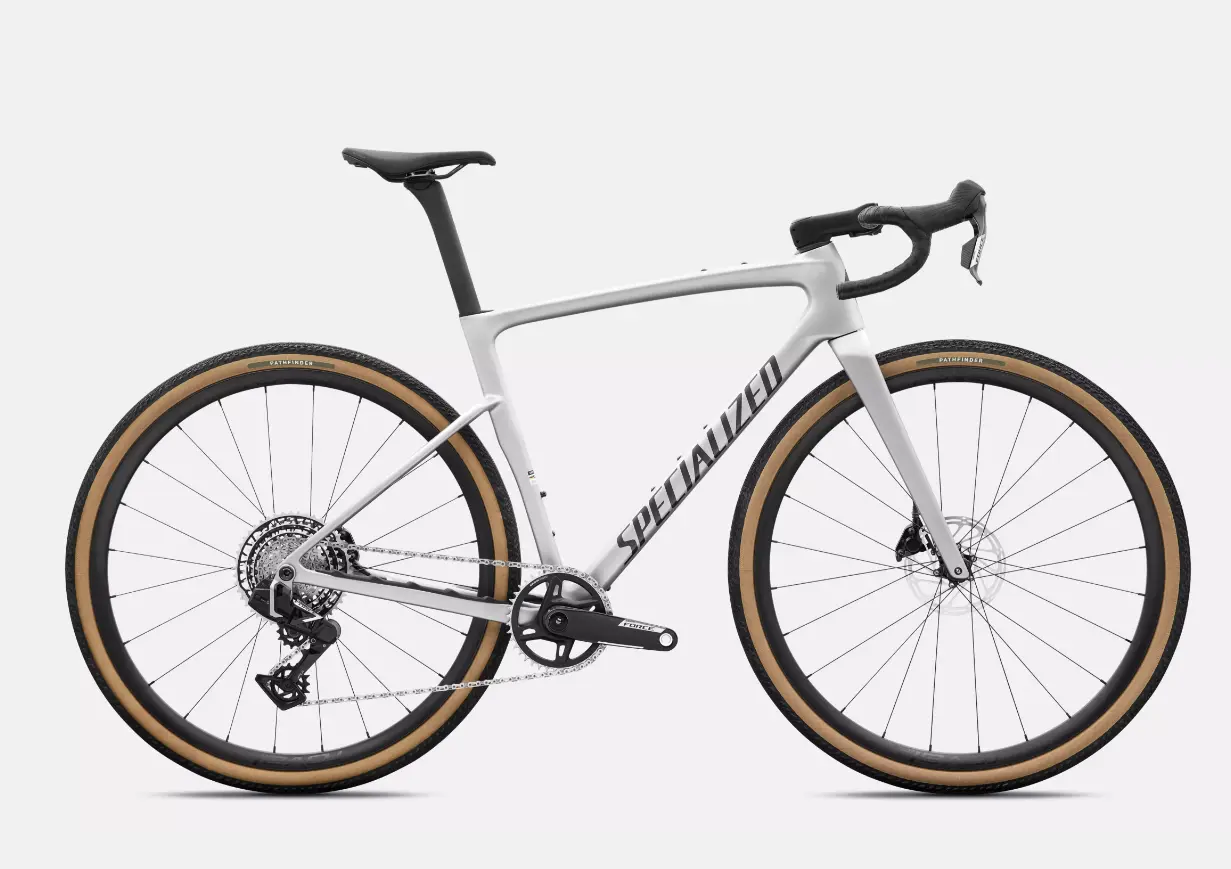
Specialized dropped the Crux 5 today, and it’s a bigger departure than most people expected. The round tubes are gone. The cross-racing DNA is largely gone. What you’re left with is essentially a fat-tire Tarmac built to win at Unbound — and honestly, that’s probably the right call for where gravel racing is in 2026.
From Cross Bike to Pure Gravel Weapon
The original Crux was always a little weird in a good way. It came out of cyclocross, landed in gravel, and held onto that lightweight-above-all-else philosophy while the rest of the industry started chasing aerodynamics. For a while that positioning worked. But gravel racing has evolved considerably — races like Unbound reward sustained efficiency over 200 miles, tires have gotten bigger, and nearly every serious gravel brand has run their bikes through a wind tunnel by now. The Crux had to evolve or get left behind.
The fifth generation trades its weight-weenie identity for aero tube shaping drawn directly from Specialized’s Tarmac SL8 road program. Visually it takes more cues from the SL7 than the SL8 — Specialized skipped the “Speed Sniffer” nose cone — but the truncated aerofoil profiles run throughout. Every single tube has been reshaped. The result is a claimed 15.2-watt improvement over the outgoing Crux 4 at race speeds, measured with Specialized’s sixth-generation moving-leg mannequin in their wind tunnel.
That aero gain breaks down as a system: roughly half comes from the frame, fork, and seatpost; 30% from the new Roval Terra Aero wheels; and 20% from the integrated Terra cockpit. It’s not just a frame story — Specialized is selling the whole package as a speed system.
To put a number on what those watts translate to in the real world, Specialized built race simulations incorporating telemetry data from sensors mounted under racers’ saddles to measure surface roughness, energy loss, and fatigue. Their projection: Sofia Gómez Villafañe would have finished nearly 10 minutes faster at the 2025 Unbound 200 on the Crux 5 versus the Crux 4. Worth noting that the Crux 4 wasn’t aero-optimized to begin with, and every other brand has been doing this same wind tunnel work in the meantime.
The Specs That Matter
The S-Works FACT 12r frame weighs 789 grams at size 56, up modestly from 727g on the previous generation — a small but real penalty in exchange for the aero reshaping. The complete S-Works build comes in at 7.1kg, which is impressively light for a bike designed to run 55mm rubber.
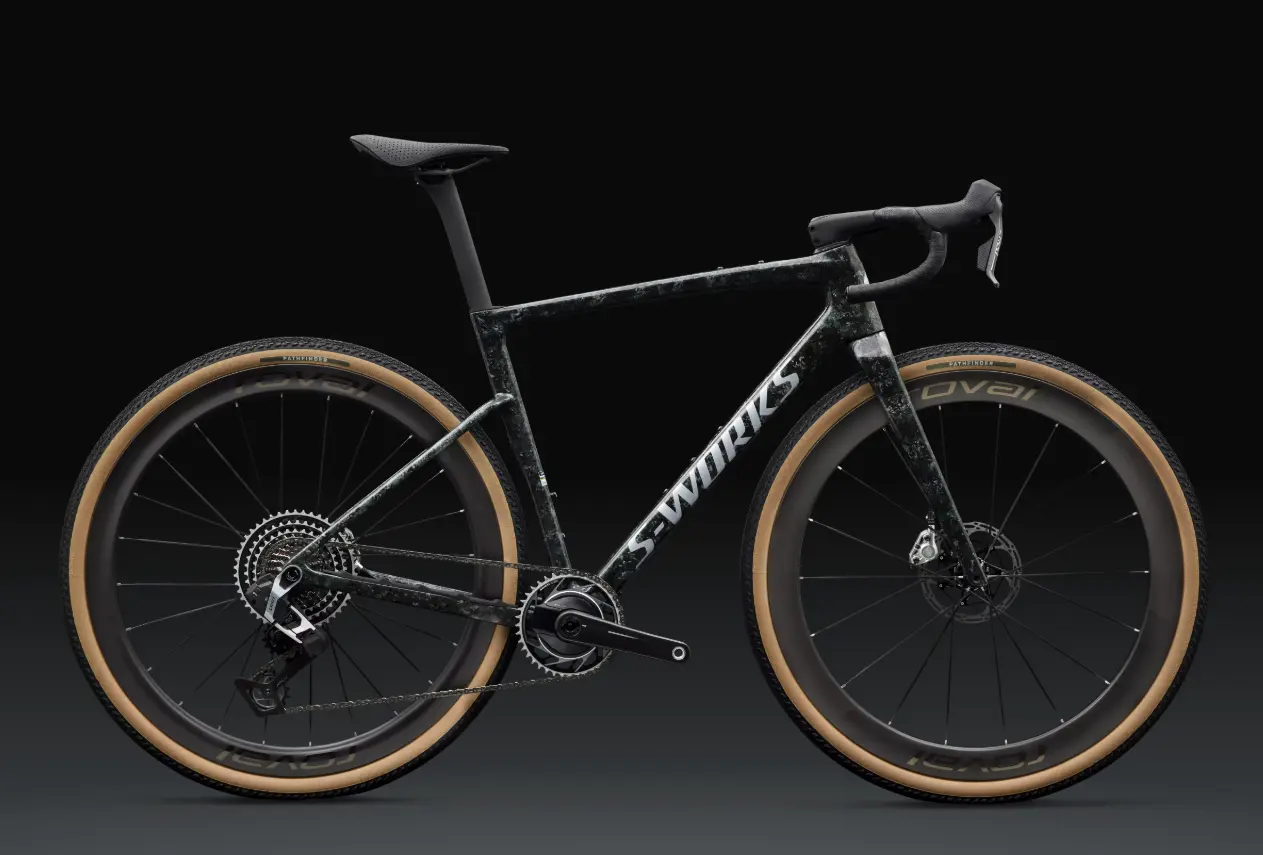
Photo: Specialized
That tire clearance is the other headline number. The Crux 4 cleared 47mm; the Crux 5 handles 55mm front and rear with room to spare for mud and tread. That’s a meaningful jump, and it puts the bike right in line with where gravel racing is heading. For reference, even the new Diverge 4 — Specialized’s adventure-focused gravel bike — only goes to 50mm. The Crux 5 is going bigger while keeping the same 425mm chainstay length across all sizes, which required serious work in the rear triangle.
Geometry has been nudged in the right places. The head tube angle slackened by half a degree (72° to 71.5° on a size 56), reach got slightly longer on larger sizes to work better with shorter stems, and the bottom bracket sits lower than before. None of this is a dramatic departure from the Crux 4, but the combined effect should produce more confidence at speed on technical terrain.
Rider First Engineered means each size from 49 to 61cm gets its own carbon layup, so ride characteristics should stay consistent across the range rather than the ultra-stiff small / noodly large phenomenon you get with one-layup-fits-all approaches. Threaded BSA bottom bracket and UDH dropout are both retained — good calls.
The 1x-Only Compromise
Here’s where the engineering reality shows up. Getting to 55mm clearance without lengthening the chainstays required dropping the inner chainring entirely. The Crux 5 is 1x-only, full stop. The frame clears up to a 52-tooth chainring up front, and you’ll be running a wide-range cassette out back. For most gravel racers at this tier that won’t be a dealbreaker — 1x with a big cassette is where elite racing is anyway. But it’s worth knowing going in.
No suspension, no SWAT storage, no fender mounts either. This is a race bike with exactly one job. If you want any of those features, the Diverge 4 is right there in the same showroom.
What It Costs
| Build | Drivetrain | Wheels | Price |
|---|---|---|---|
| S-Works Crux 5 | SRAM RED XPLR | Roval Terra CLX Aero | $13,999 |
| Crux 5 S-Level | SRAM RED XPLR | Roval Terra Aero CL | $10,499 |
| Crux 5 Expert | SRAM Force XPLR | Roval Terra CL III | $6,999 |
| Crux 5 Comp | SRAM Rival XPLR | DT G540 | $4,499 |
| Crux 5 Sport | Shimano GRX 800 Mech | DT G500 | $3,999 |
| S-Works Frameset | FACT 12r | — | $5,799 |
| Crux 5 Frameset | FACT 10r | — | $3,499 |
The Comp at $4,499 with SRAM Rival XPLR is likely where most people will land. The Sport at $3,999 with mechanical GRX is a solid entry point if you want the new FACT 10r frame without going wireless.
The wheel spec difference between S-Works and S-Level is worth flagging: the S-Works gets the Terra CLX Aero (full carbon clincher), while the S-Level drops to the Terra Aero CL at $3,500 less. If you’re buying the S-Level with the intent to upgrade wheels anyway, the FACT 12r frameset at $5,799 is worth a look.
Worth noting: Specialized is still clearing out Crux 4 inventory at significant discounts — the outgoing S-Works Crux is currently marked down to $8,949 from $11,999, and older Expert and Comp builds are similarly reduced. If you don’t need the Crux 5’s aero shapes, there’s real value sitting on the shelf right now.
Worth the Evolution?
The design shift will bother some people. The Crux 4 had a clean, almost understated aesthetic that aged well, and there’s a legitimate argument that the gravel world didn’t need another Tarmac lookalike. But looking at where racing is in 2026, this is the bike Specialized had to build. The numbers are credible, the tire clearance is genuinely useful, and the fundamentals are all in the right place.
Whether those aero gains translate meaningfully to the rest of us — riders not covering 200 miles at threshold — is the honest question. Specialized’s own simulation data is built around elite performance at elite events. Most of us aren’t Sofia Gómez Villafañe. But a fast, light, capable gravel race bike with 55mm clearance is still fast, light, and capable for everyone else too.
Expect to see the Crux 5 in action at Unbound this weekend.