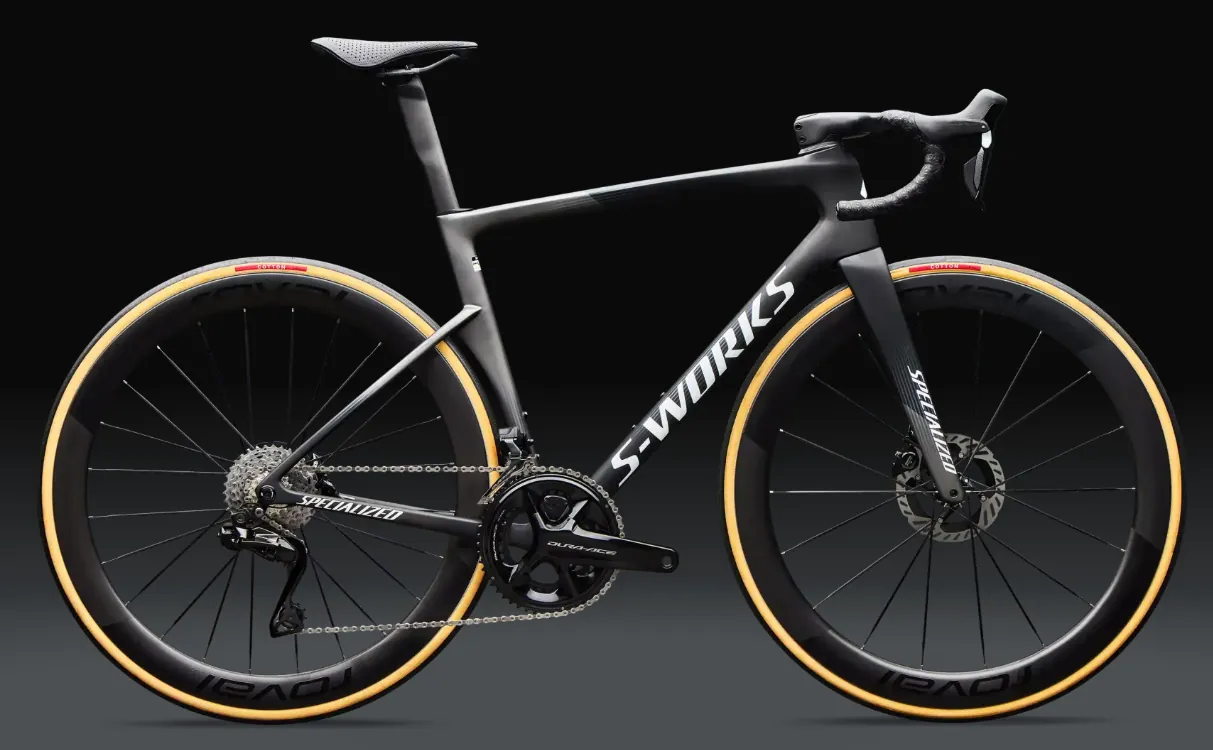
When the Tarmac SL9 launched in June, it was S-Works only, at $13,500 and up. In August, Specialized filled in the lineup with S-Level, Expert and Comp models built on a cheaper FACT 10r frame, starting at $4,500. All of them use the same aero tube shapes as the S-Works. So which one should you actually buy?
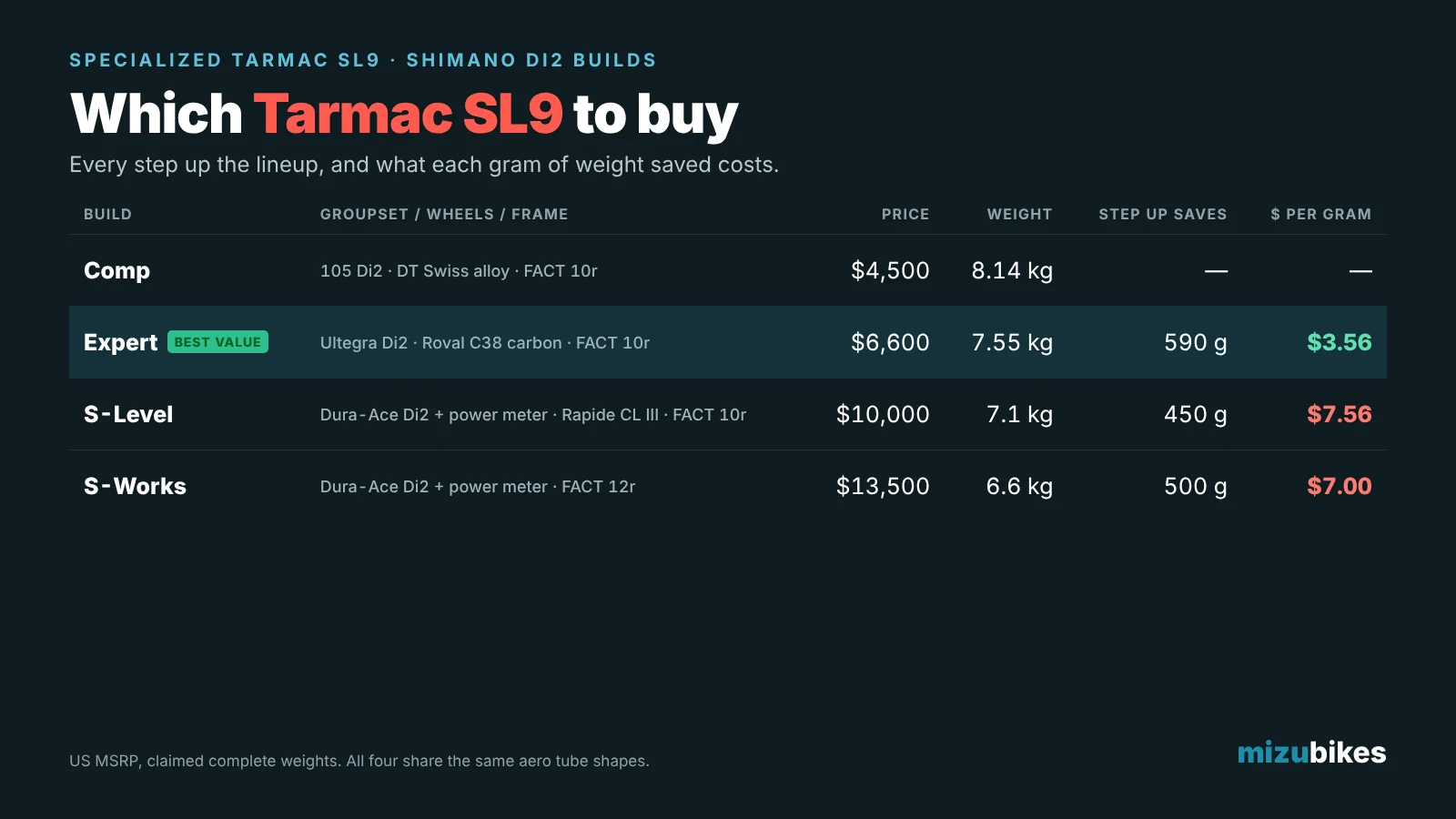
Quick answer: The Tarmac SL9 Expert is the one to buy for most riders. At $6,600 with Ultegra Di2 (or $7,000 with SRAM Force AXS), it gets you the SL9 frame shape, carbon Roval wheels and a claimed 7.55 kg. Going up to S-Level or S-Works saves weight, but each gram costs about twice as much as it does going from Comp to Expert.
 Graphic: Mizubikes
The Tarmac SL9 lineup
| Model | Shimano build | SRAM build | Frame | Wheels | Claimed weight |
|---|---|---|---|---|---|
| Comp | 105 Di2, $4,500 | Rival AXS, $4,500 | FACT 10r | DT Swiss R470 alloy | 8.14 kg |
| Expert | Ultegra Di2, $6,600 | Force AXS, $7,000 | FACT 10r | Roval C38 carbon | 7.55 kg |
| S-Level | Dura-Ace Di2 + power meter, $10,000 | Red AXS + power meter, $10,500 | FACT 10r (12r fork) | Roval Rapide CL III | 7.1 kg |
| S-Works | Dura-Ace Di2 + power meter, $13,500 | Red AXS + power meter, $14,000 | FACT 12r | Roval Rapide (top tier) | about 6.6 kg |
All models come on 30mm tires: S-Works Turbo on the Comp and Expert, and Turbo Cotton on the S-Level and S-Works. S-Level replaces the old “Pro” level. Weights are Specialized’s claims for a 56cm complete bike.
What changes as you go up
Frame. The S-Works gets FACT 12r carbon. Everything else gets FACT 10r, which Specialized says matches the 12r’s stiffness and ride feel but weighs more. The claimed difference is about 135g (822g vs 687g for a 56cm frame), and Velo reported the 10r even heavier at 882g. Either way, the shapes are identical, so the aero performance should be the same. You’re paying for frame weight, not speed.
Wheels. This is the biggest jump in the lineup. The Comp’s DT Swiss R470 alloy wheels are a big part of why it weighs almost 600g more than the Expert, which gets carbon Roval C38s. The S-Level and S-Works step up again to Roval’s Rapide wheels.
Cockpit and power meter. The Comp and Expert get a two-piece alloy bar and stem. The S-Level and S-Works get Specialized’s one-piece Rapide cockpit and a dual-sided power meter.
Ranked by value: what each step up costs
Using the Shimano builds:
| Step up | Extra cost | Weight saved | Cost per gram |
|---|---|---|---|
| Comp → Expert | $2,100 | 590 g | $3.56 |
| Expert → S-Level | $3,400 | 450 g | $7.56 |
| S-Level → S-Works | $3,500 | 500 g | $7.00 |
The SRAM builds tell the same story: Comp to Expert costs $4.24 per gram, Expert to S-Level $7.78, and S-Level to S-Works $7.00.
The Comp-to-Expert step is the best value in the lineup by a wide margin. You get carbon wheels, a better groupset and almost 600g off for $2,100. After that, every step costs about twice as much per gram. The S-Level and S-Works add a power meter, though, and that’s worth several hundred dollars if you’d buy one anyway.
Which Tarmac SL9 should you buy?
Tarmac SL9 Expert ($6,600 Di2 / $7,000 AXS): the one most people should buy. It’s the same aero frame shape as the S-Works, with carbon wheels and Ultegra Di2 or Force AXS. If you want to make it lighter later, upgrade the wheels first. On a Force AXS build, my SRAM Red vs Force breakdown shows which Red parts are worth swapping in.
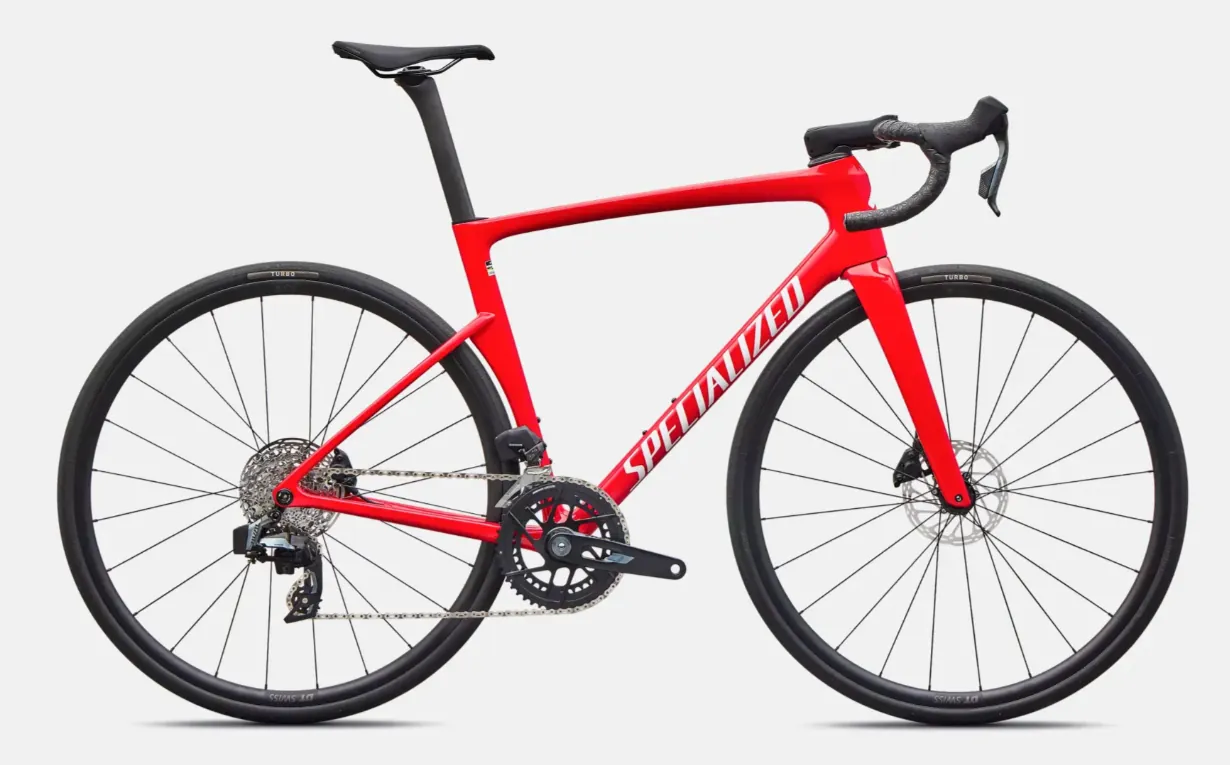 Tarmac SL9 Comp, Rival AXS. Photo: Specialized
Tarmac SL9 Comp ($4,500): only if that’s your budget. It’s the cheapest way into the SL9 frame, but the alloy wheels hold it back. Plan to upgrade them, which closes most of the gap to the Expert. Even a set like the Zipp 454 NSW on the used market would transform it.
Tarmac SL9 S-Level ($10,000 / $10,500): if you want a power meter and the good cockpit. Dura-Ace or Red, a dual-sided power meter and the one-piece Rapide cockpit make it the “closest to S-Works” build. If you’d buy a power meter and an integrated cockpit anyway, the math looks a lot better.
S-Works Tarmac SL9 ($13,500 / $14,000): if you’re racing and want the lightest. The FACT 12r frame and top wheels get it to about 6.6 kg. That’s 500g less than the S-Level for $3,500, and it’s the bike you buy because you want the best, not because the numbers say so.
Should you just buy an SL8 instead?
Maybe. The SL9 is an evolution, not a revolution. I went through what actually changed in Tarmac SL9 vs SL8. With the SL9 out, discounted SL8s are a strong buy this winter, especially with the Black Friday sales running now. My Black Friday bike deals post tracks the sales as they go live. Considering a frameset instead? I compared the S-Works SL9 frameset with the Canyon Aeroad CFR. And if you’d rather build one from parts, I worked out whether a custom SL8 build is cheaper than a complete.
FAQ
What’s the difference between the Tarmac SL9 Expert and S-Works? The S-Works uses a lighter FACT 12r frame, a Dura-Ace or Red groupset with a power meter, Rapide wheels and a one-piece cockpit. It’s about 950g lighter than the Expert for $6,900 more. The frame shape and aero features are the same.
Is the Tarmac SL9 FACT 10r frame slower than the 12r? It shouldn’t be. Both use the same tube shapes. The 10r is heavier, about 135g by Specialized’s claim, but Specialized says it matches the 12r for stiffness and compliance.
How much does the Tarmac SL9 weigh? Claimed complete weights are about 6.6 kg for the S-Works, 7.1 kg for the S-Level, 7.55 kg for the Expert and 8.14 kg for the Comp.