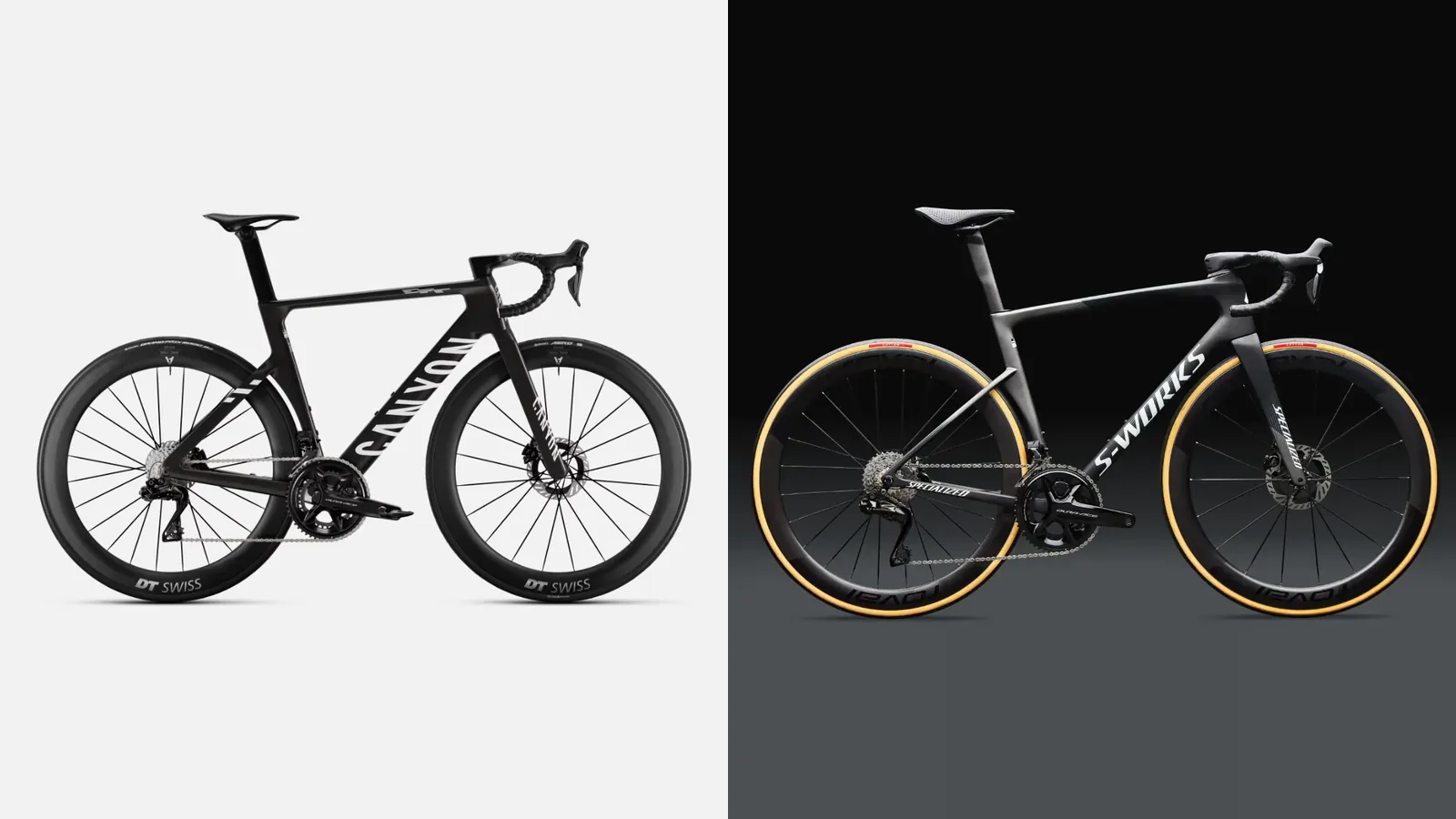
I’m watching deals on two road framesets right now: a Canyon Aeroad CFR and an S-Works Tarmac SL9. They’re both top-tier race frames from brands with WorldTour teams, and both would build into a Dura-Ace bike well under the price of a stock S-Works. But they get there in very different ways, and the price tags don’t tell the whole story. Here’s how I’m comparing them.
Quick answer: The S-Works Tarmac SL9 is the lighter, more all-round race frame, about 270g lighter than the Aeroad, with a threaded bottom bracket and the Tarmac handling everyone likes. The Aeroad CFR is the pure aero bike, and its frame kit is a much better deal: it comes with the cockpit, seatpost and Dura-Ace Di2 levers and brakes for a lot less than the SL9 frameset alone. If you ride big climbs, the SL9. If you ride fast, flat and rolling roads and want the most bike for the money, the Aeroad.
Aeroad CFR vs Tarmac SL9 at a glance
| Canyon Aeroad CFR | S-Works Tarmac SL9 | |
|---|---|---|
| Type | Aero race bike | Lightweight aero race bike |
| Frame weight | About 960g (medium) | 687g (56cm) |
| Tire clearance | 32mm | 32mm |
| Rear dropout | UDH (added for 2026) | UDH |
| Cockpit | Canyon PACE bar, adjustable width, or one-piece RACE bar | Roval Rapide one-piece, bought separately |
| Frameset includes | Frame, fork, PACE cockpit, seatpost, Dura-Ace Di2 levers and brakes | Frame, fork, seatpost |
| Frameset price | US$3,949 list on Canyon’s international USD store | $5,799.99 |
| Where to buy | Canyon direct only | Specialized dealers and Specialized.com |
Weight: the SL9’s biggest advantage
The SL9 frame is a claimed 687g in a 56. The Aeroad CFR is about 960g in a medium, and Canyon’s frame kit listing puts it at 995g. That’s roughly 270 to 300g in the frame alone. It’s the single biggest difference between these two bikes.
You can build either one light, but you’ll always be starting 270g behind with the Aeroad. A Dura-Ace S-Works SL9 comes in around 6.6 kg stock. The Aeroad CFR AXS complete is a claimed 6.9 kg in a medium. On a long climb that’s a real difference, and it’s why Cycling Weekly found the Aeroad less nimble than the Tarmac SL8 on long climbs, even though it was excellent everywhere else.
Aero: the Aeroad’s whole reason for existing
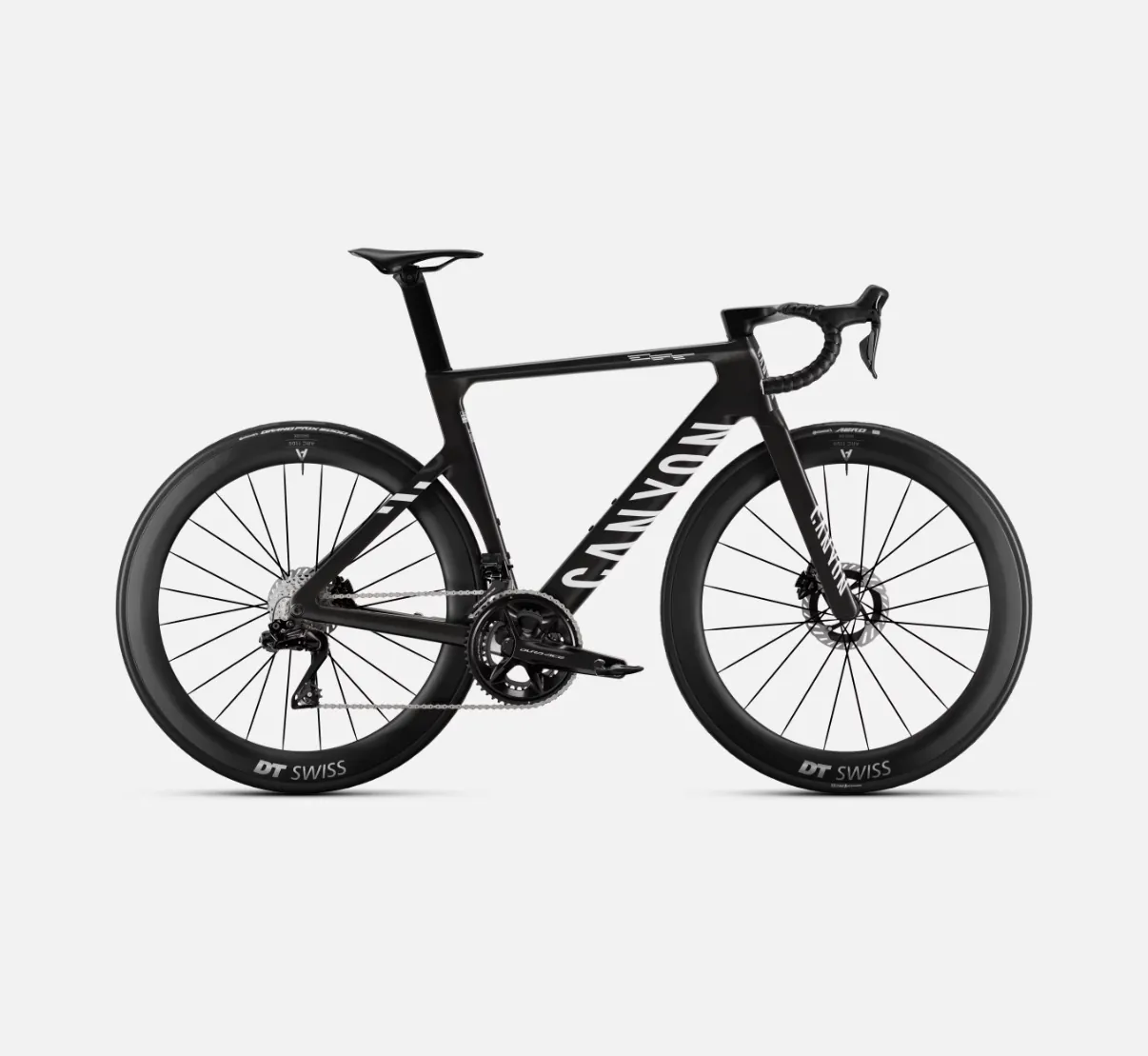 Canyon Aeroad CFR. Photo: Canyon
The Aeroad is Canyon’s pure aero bike. The updated 2026 CFR LTD measured 198 watts of drag in TOUR magazine’s wind tunnel at 45 km/h. That’s an independent test, which is worth more than any brand’s own claim.
Specialized’s claim for the SL9 is 4 watts less drag than the SL8, plus simulated race wins against other brands’ bikes. That’s Specialized’s own testing. There isn’t an independent head-to-head of the SL9 and the new Aeroad yet, so I wouldn’t put a watt number on the gap. On paper the Aeroad should be faster on flat roads. The SL9 makes up for it on climbs with less weight. Over a mixed ride, it’s close.
What’s in the box, and the real cost to build
This is where the comparison flips. The prices aren’t close once you look at what each one includes.
The Aeroad CFR frame and brake kit comes with the frame, fork, Canyon’s PACE T-bar cockpit, seatpost, and Shimano Dura-Ace Di2 levers and brake calipers. On Canyon’s international USD store it lists at US$3,949, and as I write this it’s on a members-only sale for $3,449. Check Canyon’s US store for the current US price, which can differ.
The S-Works SL9 frameset is $5,799.99 and comes with the frame, fork and seatpost. You still need a cockpit, and you still need shifters and brakes.
So to get an SL9 to the same point as the Aeroad kit, you’re adding a one-piece cockpit and the Dura-Ace levers and calipers to a frameset that already costs about $1,850 more. By the time both are built with the same Dura-Ace group and wheels, the SL9 build will cost a lot more. That’s the case for the Aeroad: you get a WorldTour aero frame with the expensive integrated parts included.
Cockpit and fit
The Aeroad’s PACE bar has adjustable drop ends, so you can change the width, which is unusual for an integrated aero cockpit. Canyon also now offers the one-piece RACE bar, 120g lighter, in 350 and 375mm widths and seven lengths. Cycling Weekly’s one complaint was that the extras, like aero drops and different stem lengths, cost more and you can’t pick them all when you order.
The SL9 uses Specialized’s one-piece Roval Rapide cockpit, which your dealer can swap for your size and width when you buy. That’s an advantage of buying through a shop: fit help, and someone to handle warranty if something goes wrong.
Handling and ride
Neither of these is a bad-handling bike. Reviewers describe the latest Aeroad as very stiff, razor-sharp and smooth on fast roads. The SL9 kept the SL8’s geometry, and first rides say it handles the same way: predictable, calm at speed and quick in corners.
I haven’t ridden either one, so I’m going by the reviews and the numbers. The pattern is clear, though: the Aeroad is the flat-road and sprint specialist, and the SL9 is the bike that does everything well, especially climbing.
Maintenance and compatibility
Both now have UDH dropouts, so both work with SRAM’s direct-mount derailleurs, including 13-speed XPLR if you want to go 1x like my SuperSix Evo build. The SL9 keeps a threaded bottom bracket. The Aeroad uses T25 bolts for almost everything, including the thru-axle, so one tool covers most of the bike.
Tire clearance is the same at 32mm. That’s plenty for a race bike, but neither of these is a bike for 35mm tires and rough roads.
Which one would I buy?
If I find them at similar prices, the SL9. Weight matters on the long climbs around here, the Tarmac handling is proven, and having a dealer behind a frame this expensive counts for something.
But at current prices, the Aeroad CFR frame kit is hard to argue with. You get an independently tested, very fast aero frame plus the cockpit, seatpost and Dura-Ace Di2 levers and brakes for far less than the SL9 frameset on its own. If you mostly ride fast, flat or rolling roads, it’s the better value by a wide margin.
I’m watching both through Black Friday. Canyon runs member pricing and outlet deals, and Specialized framesets show up on sale at dealers. I’m tracking those on my Specialized deals page and in the Black Friday bike deals post. If you’re deciding which SL9 build to get instead of a frameset, see Tarmac SL9 Comp vs Expert vs S-Level vs S-Works, and for what changed from the last generation, Tarmac SL9 vs SL8.
FAQ
Is the Canyon Aeroad CFR lighter than the Tarmac SL9? No. The S-Works SL9 frame is a claimed 687g in a 56. The Aeroad CFR frame is about 960g in a medium.
Is the Aeroad faster than the Tarmac SL9? It should be on flat roads. The updated Aeroad CFR LTD measured 198 watts in TOUR’s wind tunnel at 45 km/h. There’s no independent head-to-head with the SL9 yet. The SL9’s lower weight helps on climbs.
What comes with the Aeroad CFR frame kit? The frame, fork, PACE cockpit, seatpost, and Shimano Dura-Ace Di2 levers and brakes.
What’s the tire clearance on the Aeroad CFR and Tarmac SL9? Both clear 32mm tires.