Mizubikes may earn a commission from links in this post.
Quick answer: The best gravel bike under $2,000 for most riders is the Canyon Grizl 6 at $1,999, with 12-speed SRAM Apex XPLR and room for 29 x 2.1" tires. The Specialized Diverge E5 ($1,499) is the better pick for mixed pavement, and the Giant Revolt 2 ($1,500) is the value choice.
Two grand buys a lot more gravel bike than it used to. Aluminum frames with carbon forks, hydraulic brakes, tubeless-ready wheels and 45mm-plus tire clearance are now normal at this price. The compromises are mostly in weight, wheels and drivetrain refinement, and those are the parts you can upgrade later.
Prices drift all the time, and a few of these bikes sit right at the $2,000 line. I’ve used US prices from the brand or US retailers, and I’ve flagged the one pick that now lists above the cap. Everything below comes from specs and published reporting, not from my own time on these bikes.
Canyon Grizl 6: the best spec for the money
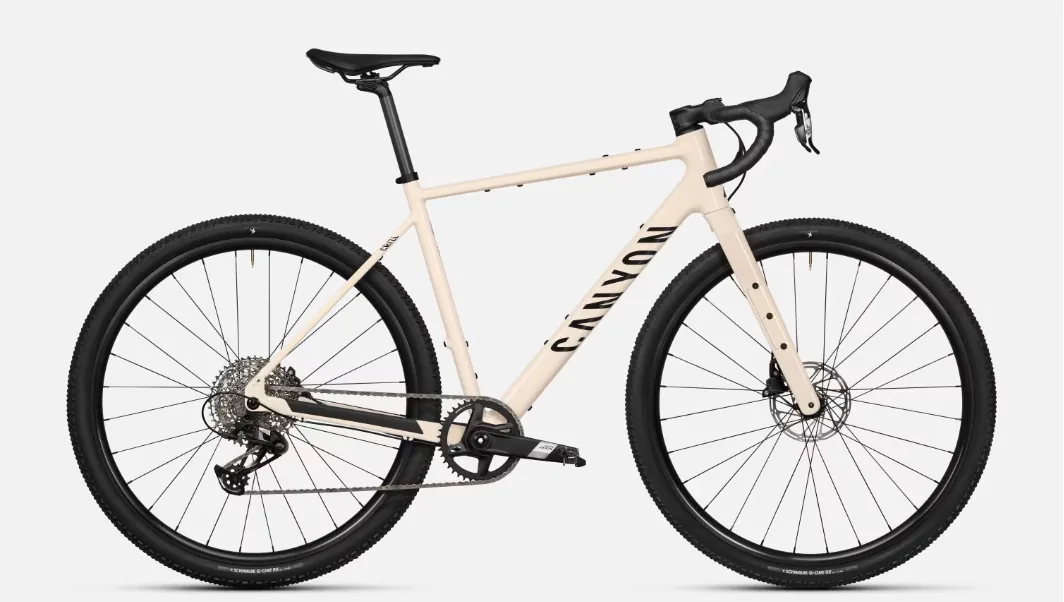
If I were spending my own $2,000 on paper specs alone, I’d start with the Canyon Grizl 6. Bikepacking.com reported that US buyers currently get one option, the Grizl 6 AL at $1,999, with a 12-speed SRAM Apex XPLR groupset, hydraulic brakes, aluminum Alex rims and Schwalbe G-One RX Performance tires. Canyon also says the frame takes 29 x 2.1" tires, which is MTB-sized rubber on a drop-bar bike.
Bikerumor adds that the Grizl 6 has a mechanical Apex XPLR 1x12 setup with an 11-44T cassette. That’s a wide range for loaded climbing, with the usual 1x tradeoff of bigger jumps between gears. Price trackers showed it discounted to $1,749 in late October, so check Canyon’s site before you pay full price.
The catch is the usual direct-sales one. You’re sorting out sizing and fit without a shop in the loop, and Canyon’s US lineup in this range is just the one bike for now.
Specialized Diverge E5: the road-friendly all-rounder
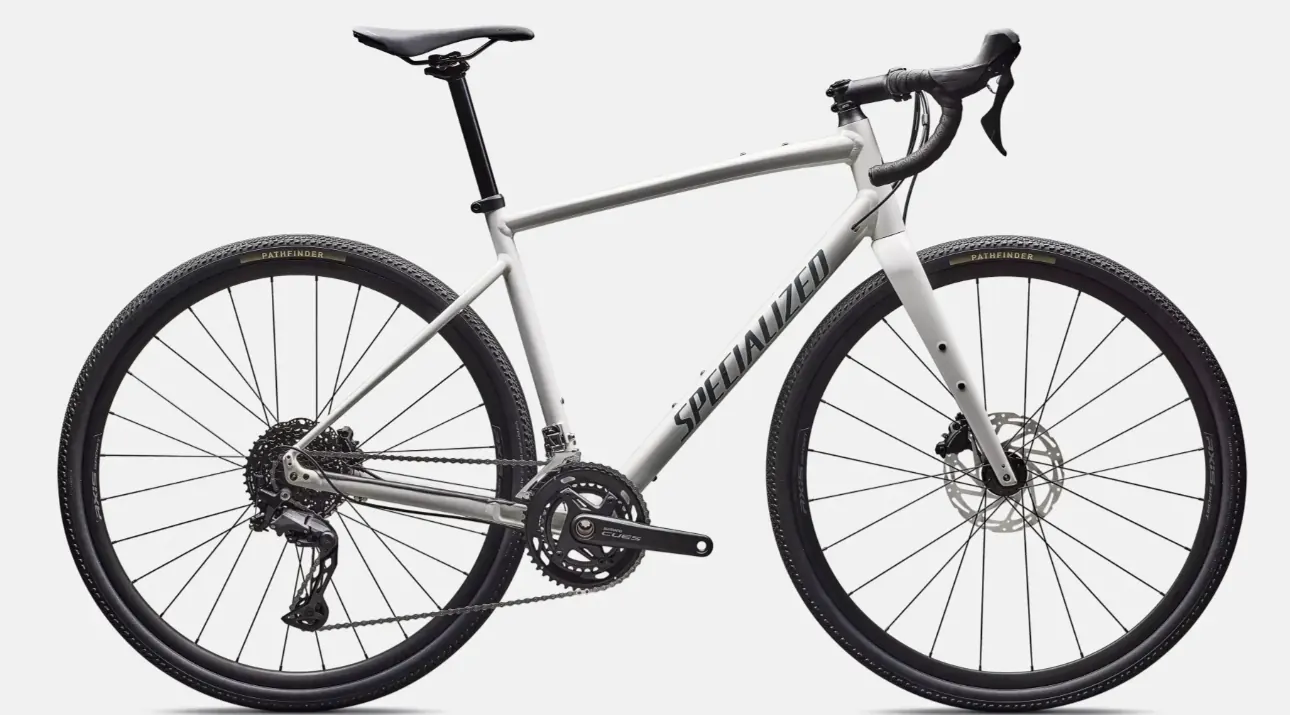 Specialized Diverge E5. Photo: Specialized
The Specialized Diverge E5 is the bike I’d point road riders toward. It’s listed at $1,499 on 99 Spokes, with retailers at $1,599. The build is a premium E5 alloy frame with a full carbon FACT fork, Shimano CUES 2x10, Axis alloy wheels and 40mm Pathfinder tires. Specialized rates the frame for 47mm of tire clearance on 700c wheels.
The 2x10 CUES drivetrain is the clearest sign of where the money went. It’s reliable and gives you a proper low gear, but it’s heavier and less crisp than GRX or XPLR. The 40mm tires are a mixed-surface compromise, so if your routes are rougher than hardpack, budget for wider tubeless rubber. Our best gravel tires guide covers that upgrade.
Giant Revolt 2: the value pick
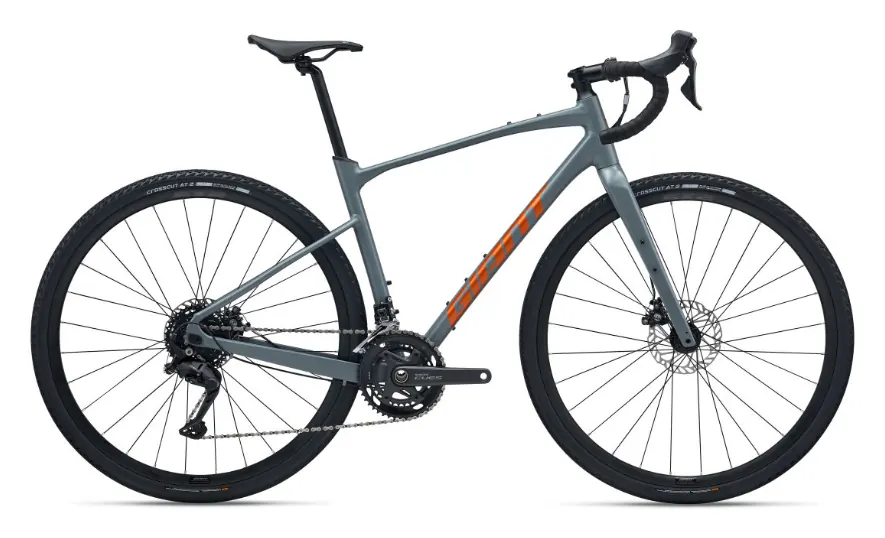 Giant Revolt 2. Photo: Giant
Giant has quietly kept the Revolt’s alloy entry point affordable. The 2026 Giant Revolt 2 is $1,500 at US dealers, with an ALUXX aluminum frame, a composite fork and 45c CrossCut Grip 1 tires. The drivetrain is Shimano 2x9 (CUES or Sora depending on availability) with 32/46T chainrings and an 11-36T cassette, which gives you a properly low climbing gear.
The frame is the draw. It has a flip-chip rear dropout: in the long position it clears 53mm tires, and in the short position it clears 45mm with a slightly quicker feel. That’s more clearance than anything else here except the Grizl. Reviewers also like the Revolt family’s relaxed, upright fit, which suits long days better than a race position.
The compromise is the brakes. The Revolt 2 uses Shimano mechanical disc brakes rather than hydraulics, so they won’t have the same power or lever feel, and they’re the first thing I’d upgrade. The next step up, the Revolt 0, sits around $2,198 on one tracker, already over this guide’s cap.
Cannondale Topstone 3: the spend-less option
Cannondale’s alloy Topstone line has several rungs. The Cannondale Topstone 3 CUES 2x is listed at $1,699, with 32/46T chainrings and an 11-39T cassette, on 37mm tires. That 37mm is on the narrow side for gravel, but the frame itself is rated larger. The Topstone 1 page lists 45mm of tire clearance.
Cheaper Topstone trims also show up around $1,400 on price trackers. One caution: the Topstone 2 sits right at $2,000 (and $2,199 with GRX 400 2x), so you’re paying for a modest drivetrain bump. I’d rather take a cheaper trim and spend the difference on tires and a proper fit.
The Topstone range also has the Kingpin rear suspension and Lefty fork bikes. Those are carbon and cost much more, so don’t confuse them with the alloy models here.
Trek Checkpoint ALR 5 Gen 3: the stretch pick
The Trek Checkpoint ALR 5 Gen 3 is a hair over the cap, so treat it as a stretch. BikeRadar’s review listed it at $2,099, but several US retailers now list $2,199.99. Wait for a sale or a shop that discounts, or accept that it’s a $2,200 bike.
The spec is the best of this group. It has 50mm of tire clearance, plus SRAM Apex XPLR 12-speed with a 40t crankset and 11-44t cassette. The retailer’s listed weight is 9.87 kg (21.76 lb) for the ML size. The frame also has UDH, which matters if you want a future 13-speed XPLR drivetrain. Our UDH compatibility list covers that.
The rims are Bontrager Paradigm 23s, a tubeless-ready alloy wheel with a 23mm internal width. They’re fine for now and are the obvious first upgrade down the road.
One honorable mention: Marin Gestalt X10
Marin’s Gestalt is the odd one here, a drop-bar bike with mountain-bike-style geometry. BikeRadar’s list includes the Gestalt X10 at $1,549 as tested. The 2025 listing shows $1,599, a 1x10 microSHIFT drivetrain and Tektro mechanical disc brakes. Mechanical brakes have drawn criticism for lacking feel, so I’d only pick this if you ride lots of singletrack and don’t mind that. I couldn’t confirm the 2026 price, so check Marin’s site.
How I’d choose
If your riding is rough and you may want to carry gear, the Grizl 6 is the easiest recommendation. Its wide tire clearance and 1x12 range make it feel like the most “gravel” bike here. If you split time between pavement and dirt, the Diverge E5 is the natural fit, and its price leaves room for wider tires.
If budget matters most, the Revolt 2 gets you a frame with 53mm clearance for $1,500, which leaves real money for upgrades like hydraulic brakes and tubeless tires. If you can stretch past $2,000, the Checkpoint’s wider clearance and UDH frame give it the best long-term upgrade path.
Whatever you pick, check your tire clearance numbers against what you actually plan to run. Our tire clearance chart lists max sizes for 2026 bikes, and the gravel bike buying guide covers frames, gearing and wheels in more depth.
FAQ
Can you get a good gravel bike for under $2,000? Yes. At this price you get an aluminum frame, a carbon fork, 45mm or more of tire clearance and tubeless-ready wheels. The savings come from weight, wheels and drivetrain refinement, which you can upgrade later.
Is it worth spending more than $2,000 on a gravel bike? Only if you want lighter weight, hydraulic brakes on every model, or a carbon frame. The jump to carbon usually starts around $2,500 to $3,500.
Hydraulic or mechanical disc brakes on a budget gravel bike? Hydraulic if you can. They’re stronger and need less adjustment. Of the bikes here, the Revolt 2 and Marin Gestalt X10 use mechanical discs.