After writing up which XC bike with Flight Attendant to buy, the obvious next question is whether it’s worth it at all if you don’t race. Most of us ride trails after work and on weekends, not World Cups. So will automatic suspension actually make you faster on a normal trail ride, or does it just feel nice?
Mizubikes may earn a commission from links in this post.
Quick answer: Probably not by much, and nobody has measured it for trail riding. RockShox’s only speed claim is that its internal test team averaged 1.8% faster in XC race testing. Independent reviewers haven’t measured a gain, and MBR concluded regular riders won’t see a measurable advantage, just a bike that feels more efficient. For everyday trail riding, Flight Attendant is a comfort and convenience upgrade, not a speed upgrade. The same money spent on tires, wheels or fitness will make you faster.
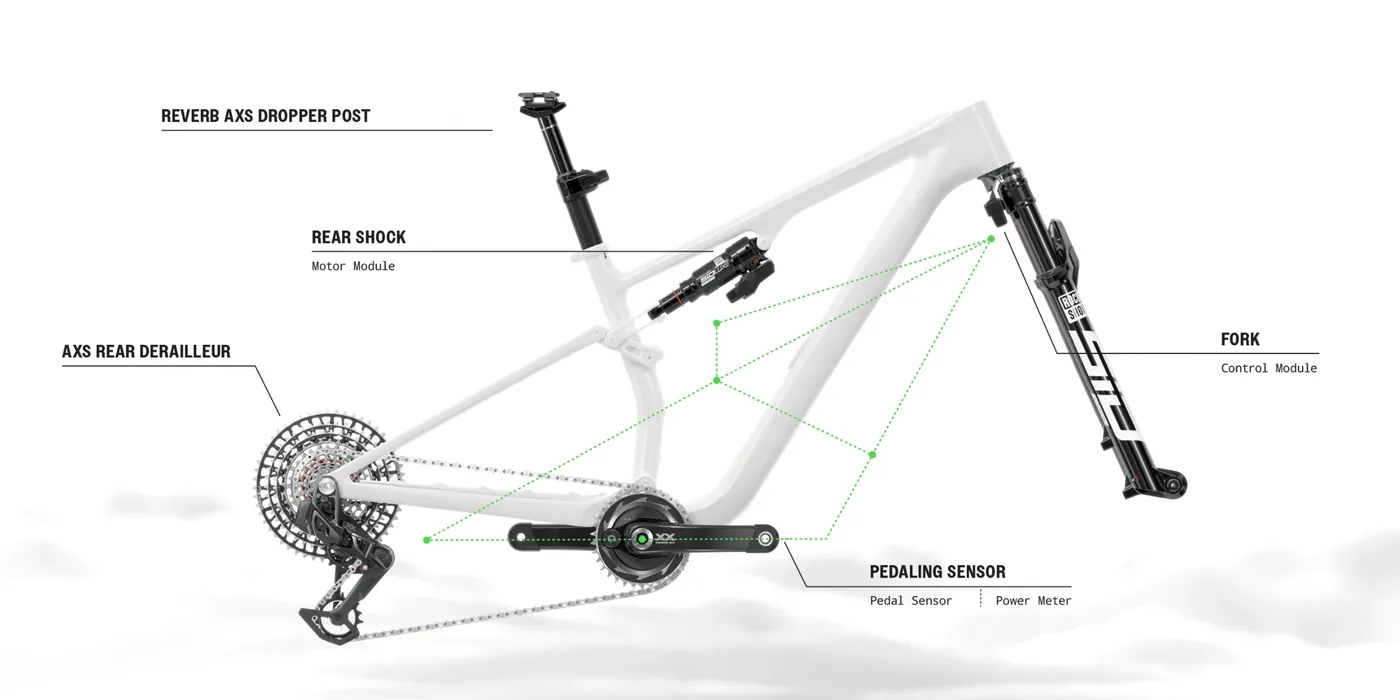 Flight Attendant uses sensors in the fork, the shock, the derailleur and a pedal sensor or power meter. Image: RockShox
Where the 1.8% number comes from
RockShox says riders on its internal test team were 1.8% faster on average with Flight Attendant than the same riders using manual lockouts. It calculates that as up to 96 seconds over a 90-minute XC World Cup race. That’s a real number for a racer, where the gap between 5th and 15th can be a minute.
But look at what’s behind it. It’s RockShox’s own test, with its own test team, in race conditions. RockShox hasn’t published the course, the number of riders or how speed was measured. Mountain Bike Action, Flow, BIKE magazine and MBR all reviewed the XC system, and none of them published a timed comparison. Every one of them quotes RockShox’s figure.
If the 1.8% did carry over to a two-hour trail ride, it would be about two minutes. That’s not nothing, but it assumes you’re riding at race effort, using your lockout perfectly on a manual bike, and that everything RockShox measured applies to your trails. For most trail riders, none of that is true.
What reviewers actually felt
The reviews agree on the feel, if not the numbers.
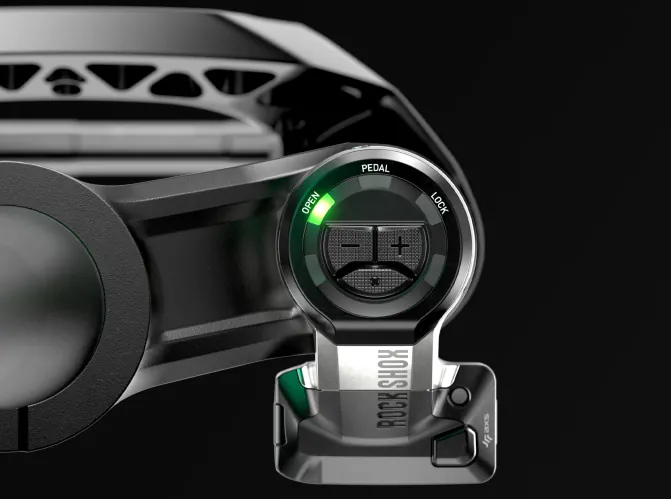 The fork’s control module switches between Open, Pedal and Lock. Photo: RockShox
It’s more efficient when you’re pushing. Flight Attendant firms up the suspension when you put down power and opens it the moment you coast or hit something. Flow called the pedaling improvement noticeable. MBR said it boosted pedaling performance but found no “real, measurable performance advantage” for regular riders.
You never forget to open your lockout. This is the one everyone mentions. MBR said the system “never, ever leaves you hanging” with the suspension locked when you need it open. If you’ve ever dropped into a descent still locked out, you know why that matters.
It doesn’t make you faster downhill. On descents it’s simply open, the same as your bike is now. Any speed gain is on climbs and flat, pedally sections.
It takes time to learn you. BIKE magazine and MBA both noted it needs about seven rides with a power meter to fully learn your effort levels. MBA also found it can lag on sudden sprints, and used the manual lockout override for those.
Where it helps on a trail ride
Rough, technical climbs. Flight Attendant can run a split mode with the shock firm and the fork open. On a rooty or rocky climb, that keeps the back of the bike efficient while the front tracks the ground. With a single remote that locks both ends together, you can’t do that on the fly, so this is the clearest real advantage on trail.
Rolling terrain with constant up and down. If your rides switch between short climbs and short descents every minute, you probably don’t bother touching a lockout at all. Flight Attendant does it for you every time, so you get the efficiency you’d otherwise skip.
Long days. It’s one less thing to think about when you’re tired. That doesn’t show up as speed in a test, but it makes long rides feel easier.
Where it doesn’t help
If your bike already pedals well. Many modern XC and downcountry bikes are designed to pedal efficiently without a lockout. On a bike like that, there’s less for Flight Attendant to fix.
If you mostly ride open. If you rarely use your lockout now because your trails are rough or descent-heavy, you’re already riding the way Flight Attendant would set your bike most of the time.
If you don’t want to manage it. It’s two extra batteries to charge, plus the power meter. MBR had a power meter battery run low and lose the adaptive features for a few rides. And depending on the setup, it adds roughly 160-300g over a mechanical system.
What it costs
Flight Attendant usually adds about $1,900 to a complete bike, according to MBA. The cheapest way in right now is the 2027 Scott Spark RC Team Issue at $8,500. Aftermarket, the SID Ultimate Flight Attendant fork was $1,449 and the SIDLuxe shock $849 at launch, before you add a SRAM power meter or pedal sensor, which it needs.
Cheaper ways to get faster on trail rides
If the goal is actually going faster, these will do more for less money:
Faster tires. Rolling resistance differences between XC tires are big, and a faster tire set costs a fraction of Flight Attendant. Check your pressure too. My gravel tire pressure guide covers the method, and the same idea applies on a mountain bike.
Lighter wheels. This feels faster more than it is, but it’s real. Over 1,000m of climbing at 250 watts, 242g less wheel weight saves about 9.5 seconds. Two pounds off the whole bike saves about 36 seconds. Those are small numbers, which is the point: most hardware upgrades give you seconds, not minutes.
A power meter on its own. You need one for Flight Attendant to work properly anyway. Used for training, it’ll make you faster than the suspension will. Pedal-based power meters are the easiest way to add one to any bike.
Use the lockout you have. If your bike has a remote, using it on long climbs gets you a good share of what Flight Attendant automates.
Would I put it on my bike?
My Epic 8 Evo runs Fox suspension and a Shimano wireless drivetrain, so going to Flight Attendant would mean a new fork, shock and drivetrain. For trail riding, I can’t justify that on speed. If I were buying a new XC bike and racing, I’d want it. For everyday trail riding, I’d put the money into tires, a lighter wheelset or a power meter first, and treat Flight Attendant as a nice-to-have if it comes on the bike.
FAQ
How much faster is Flight Attendant? RockShox claims 1.8% faster on average from internal XC race testing. No independent test has confirmed that, and reviewers say regular riders won’t notice a measurable gain.
Does Flight Attendant work without a power meter? Yes, with a SRAM pedal sensor, but it works best with a SRAM AXS power meter, which lets it learn your effort levels. Other brands’ power meters don’t work with it.
Is Flight Attendant worth it for trail riding? For most trail riders it’s a convenience upgrade, not a speed upgrade. It’s worth it if you ride rolling, technical terrain, hate managing a lockout, and the extra cost doesn’t matter to you.