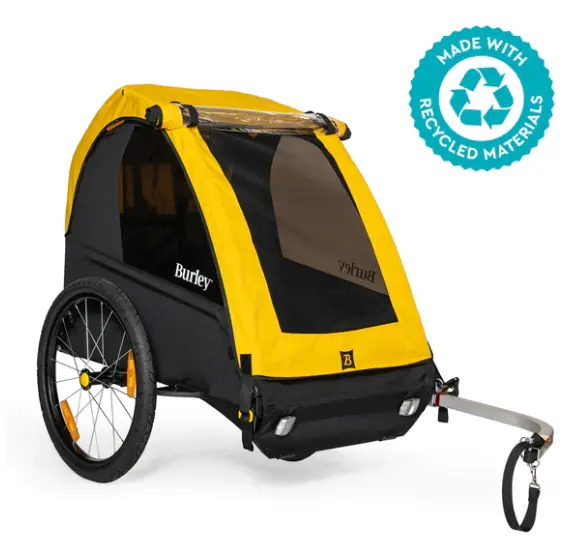
Quick answer: If you ride a road bike, want to bring a second kid or a dog, or care most about protection in a fall, get a trailer. If you need something light, cheap and easy to store and your bike has rack mounts, a rear child seat is simpler. We chose a trailer.
Mizubikes may earn a commission from links in this post.
My baby is turning one, and it’s finally time for a bike trailer or a bike seat
I have been patiently waiting till I can take my daughter out on bike rides with me in a baby bike trailer. Most of the bike trailers I have looked at recommend that the baby be at least 1 year old. Check the manufacturer’s minimum age and whether your child can sit up unsupported with a helmet on before the first ride. My plan is to look at options for trailers and the bike that it will be hooked up to.
First, should it be a bike trailer or should it be a rear child bike seat?
The two I compared most closely were the Thule RideAlong, a rear-mounted child seat, and the Burley Bee, a two-seat trailer that attaches at the rear axle.
Pros and Cons of Baby Bike Seats vs. Trailers
After researching baby bike seats and trailers, I’ve identified the key advantages and disadvantages of each option.
Pros and Cons of a Baby Bike Seat
✅ Pros:
- Easier to maneuver compared to a trailer.
- More convenient for transport and storage.
- Generally more affordable than a bike trailer.
- Lighter weight, making it easier to ride without extra drag
❌ Cons:
- Raises the bike’s center of gravity, increasing the risk of tipping.
- Offers less protection in the event of a fall.
- Mounting depends on the bike’s frame—some require rack mounts or specific seat tube designs, which may not be compatible with all road bikes.
Pros and cons of the baby bike trailer
✅ Pros:
- Provides full enclosure, offering better protection in case of a fall.
- Attaches to the axle, making it compatible with most road and mountain bikes.
- Quick to attach and detach, allowing for easy bike-only use.
- Many trailers accommodate two children—or a child and a small pet—making them more versatile.
❌ Cons:
- Requires extra storage and transport, as both the bike and trailer need to fit in a vehicle.
- Generally more expensive than a bike seat.
- Bulkier and harder to maneuver, especially on narrow trails or crowded paths.
Conclusion
Both options have advantages, but the best choice depends on your needs. Since I plan to ride directly from home, storage and transport aren’t concerns, making a trailer a viable option. Additionally, my road bike may not support a baby seat due to compatibility issues. Lastly, my wife wants the ability to take both the baby and our dog on rides, which makes the trailer the more practical choice for our family.
Ultimately, the right decision comes down to your biking setup, safety preferences, and how you plan to use it.
When it’s time for them to ride on their own, here’s how we decided between a balance bike vs training wheels for a 2-year-old.