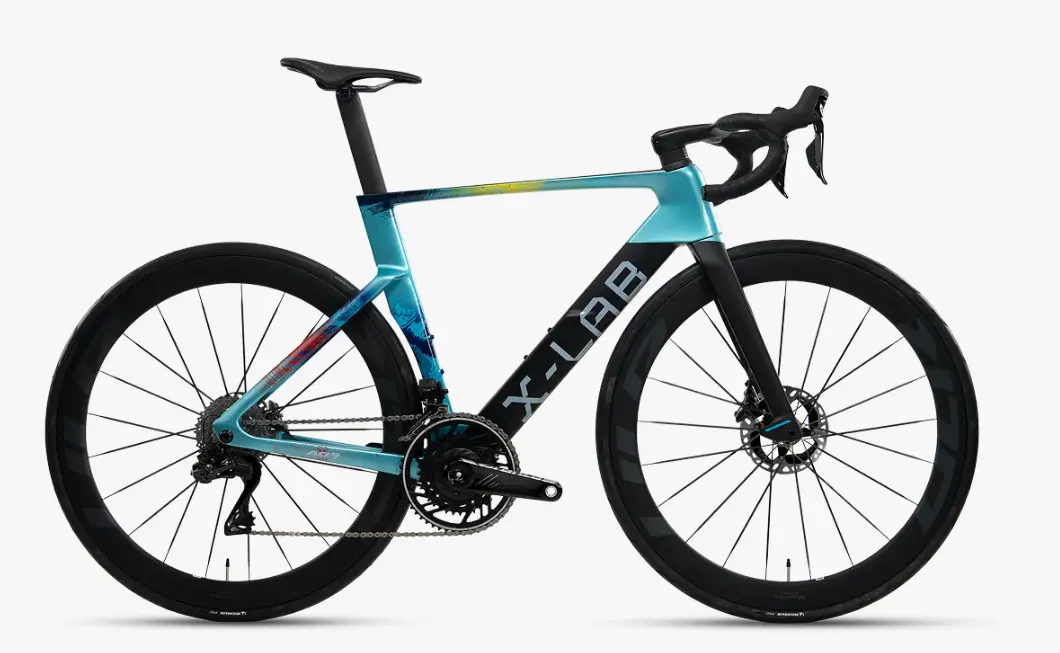
There’s a phrase cycling fans have heard for decades: “Made in China.” What’s newer — and more interesting — is “designed, developed, and racing under a Chinese brand name at the highest level of professional cycling.” That’s what XDS is doing with X-Lab in 2026, and the global launch that dropped in April makes it relevant to anyone shopping for a high-performance road bike.
This isn’t a feel-good story about underdog brands or geopolitical cycling drama. It’s a product question: are these bikes actually good, and what do they cost?
XDS and X-Lab Are Not the Same Thing
This distinction matters before you go any further. XDS is one of the largest bicycle manufacturers in the world by volume — over eight million bikes a year. The domestic Chinese market knows XDS as a mass-market brand, the kind of bikes you’d find at department stores. None of that is the bike you’re here to read about.
X-Lab is XDS’s performance sub-brand, and it operates in an entirely different tier. Think of it like Specialized and S-Works — same parent company, completely different intent and price point. X-Lab uses Toray carbon fiber (the same Japanese material that shows up in plenty of Western superbikes), does CFD and wind tunnel development, and since 2025 has had its bikes raced at WorldTour level by the XDS Astana team.
XDS Carbon Tech — the manufacturing arm — is reportedly the world’s largest carbon fiber factory. The vertical integration is the key to the pricing story, which we’ll get to.
The Lineup
X-Lab launched globally on April 8, 2026 with nine models across road, gravel, and urban/e-bike categories. For most readers here, the road bikes are the story.
RT9 — The Climber ($9,150 with Dura-Ace Di2)
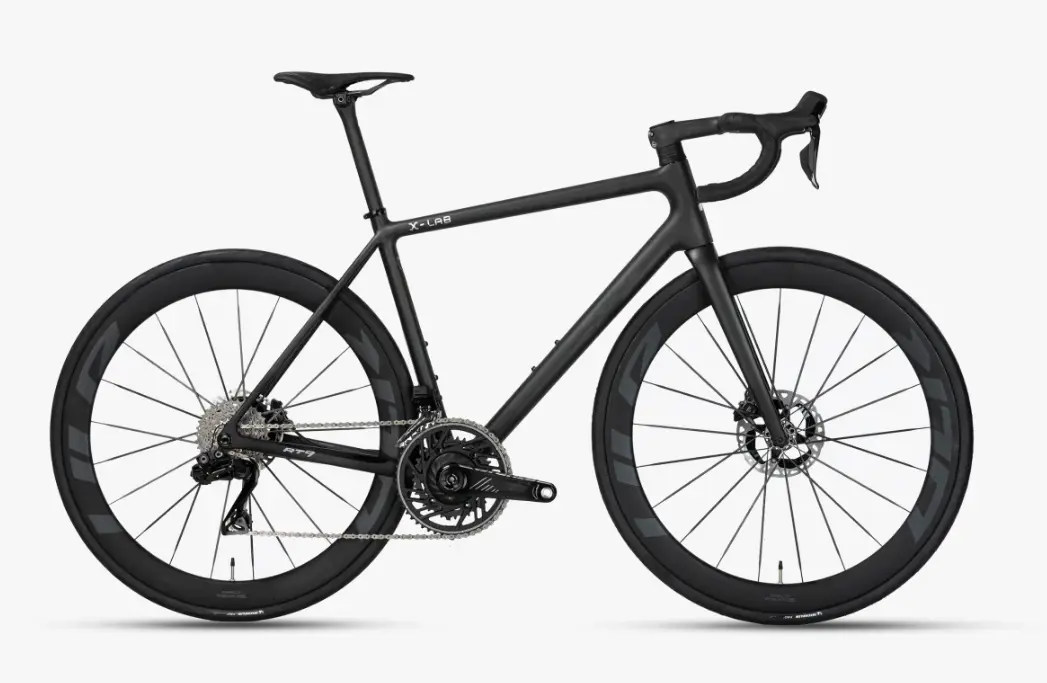
Photo: XDS / X-Lab
The RT9 is the one that gets people’s attention on spec sheets. X-Lab claims a 550-gram frame built from a mix of Toray T1100 and M40X carbon, putting it in the conversation with bikes like the Pinarello Dogma F and Specialized Tarmac SL8 on weight. Complete bike with Dura-Ace Di2 comes in at 6.2kg/13.6lbs. That’s genuinely light — the kind of number that raises eyebrows and, often, skepticism. Whether the claimed weight holds under independent scrutiny is something we don’t know yet, since third-party scale photos are thin on the ground. Worth watching as more reviews come in.
AD9 — The WorldTour Aero Racer ($7,999 with Dura-Ace Di2)
This is the bike the XDS Astana team actually races, and the one that has attracted the most attention. Toray T1100 carbon frame, Shimano Dura-Ace Di2, X-Lab’s in-house Branta integrated cockpit, and Branta C50 ULR carbon-spoke wheels at a claimed 1,230 grams. Complete bike weight is listed at 6.8kg in a size Large.
The aero claims are interesting: X-Lab says the AD9 was tested at Silverstone’s Sports Engineering Hub and posts a 1.5-watt saving over the Canyon Aeroad CFR. Cyclingnews tested it in a wind tunnel alongside current Western competitors and found the aero story holds up in broad strokes. Their review verdict was that it’s “an extremely competent, sure-footed machine” that “really lends itself to high-wattage sprints” — not the most exciting ride, but one that doesn’t put a foot wrong. That’s actually a reasonable description of what a good aero bike should be.
The frameset alone (with integrated seatpost and cockpit) runs $3,751, which undercuts comparable frames from Specialized, Trek, and Giant by a meaningful margin. In the UK market it landed at around £2,553 — compared to over £4,000 for an S-Works Tarmac SL8 frameset.
AD8 — The Accessible Aero ($4,499 with Shimano 105 Di2)
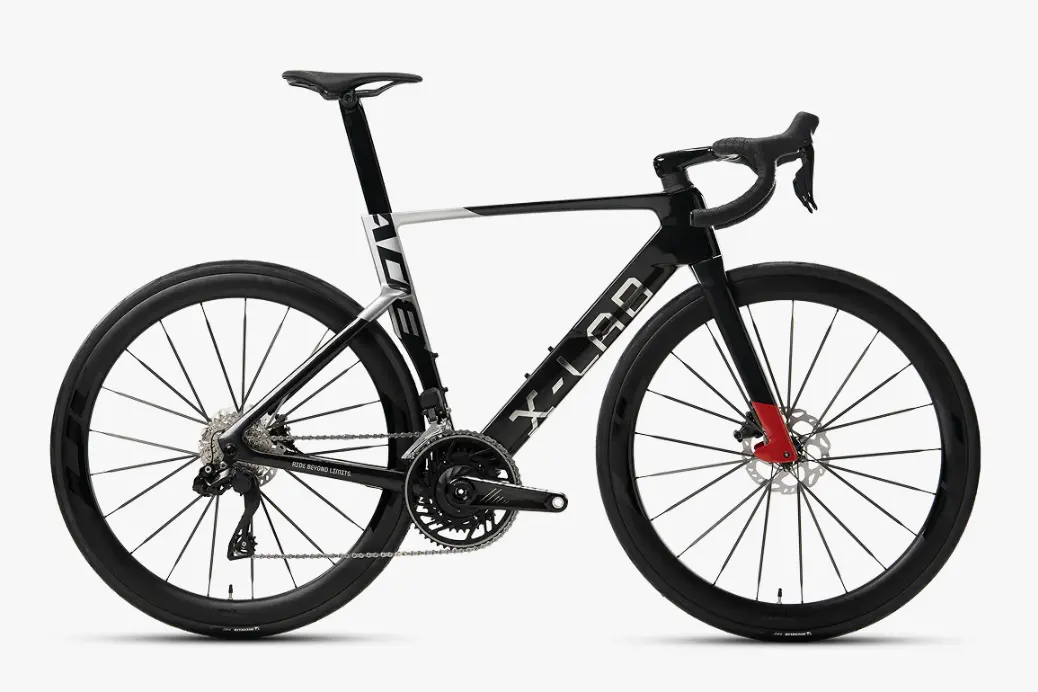
Photo: XDS / X-Lab
Drop down one rung from the AD9 and the AD8 gives you the same aero-road silhouette in Toray T800 carbon with Shimano 105 Di2 and a claimed 7.41kg complete weight in a Large. At $4,499 it’s probably the model most performance-oriented amateurs will look at first. A Dura-Ace Di2 build of the AD9 at $7,999 is competitive but not jaw-dropping. An aero road bike with 105 Di2 electronic shifting at $4,499 is harder to dismiss.
GT8 — The Gravel Option ($3,199 with GRX 715 1x Di2)
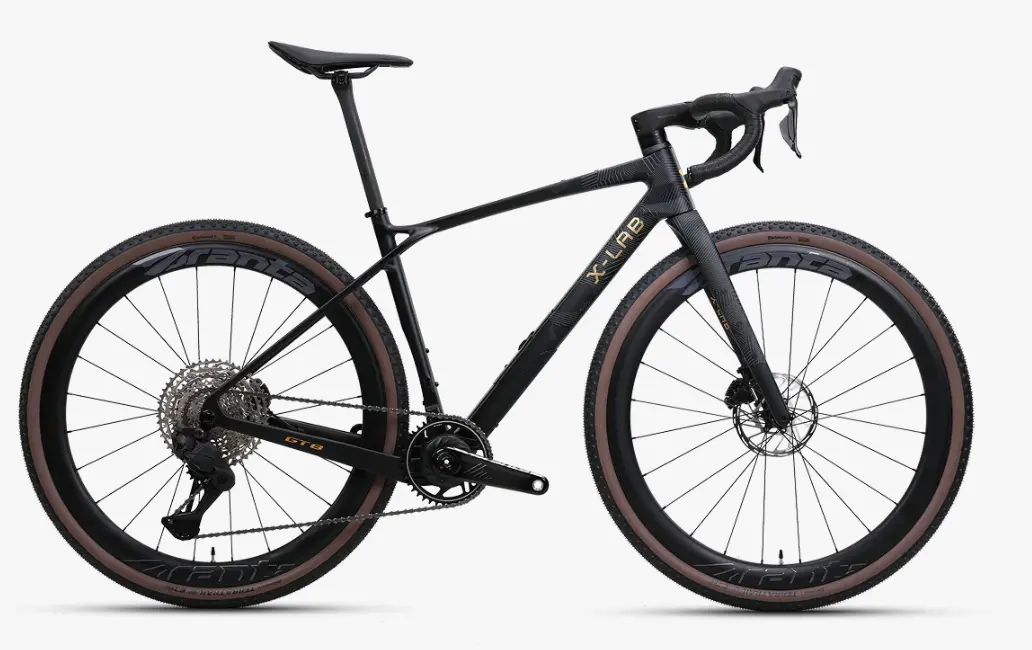
Photo: XDS / X-Lab
X-Lab’s first dedicated gravel bike. Full carbon frame and fork, Shimano GRX 715 single-ring Di2, in-frame storage, mounts all over the place, and clearance for up to 55mm tires. The Branta carbon cockpit and a rechargeable power meter crankset are included. At $3,199 for a carbon gravel bike with electronic shifting and a built-in power meter, this is the kind of spec sheet that normally comes with a much larger number at the end.
RS7 and RS5 — The Rest of the Road Range
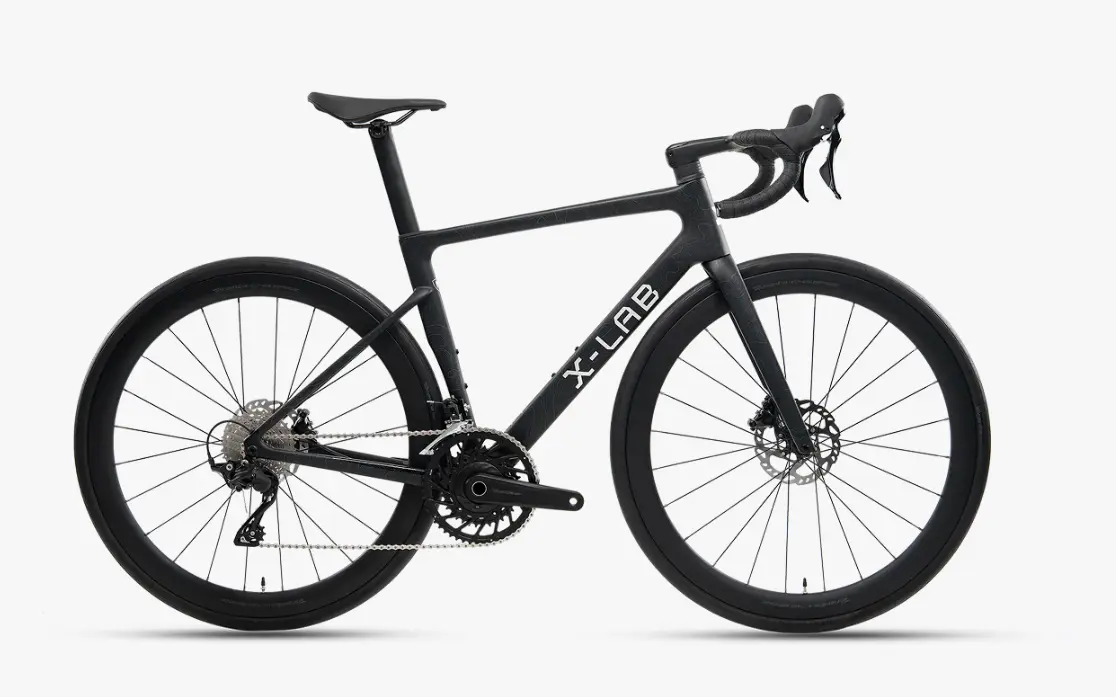
Photo: XDS / X-Lab
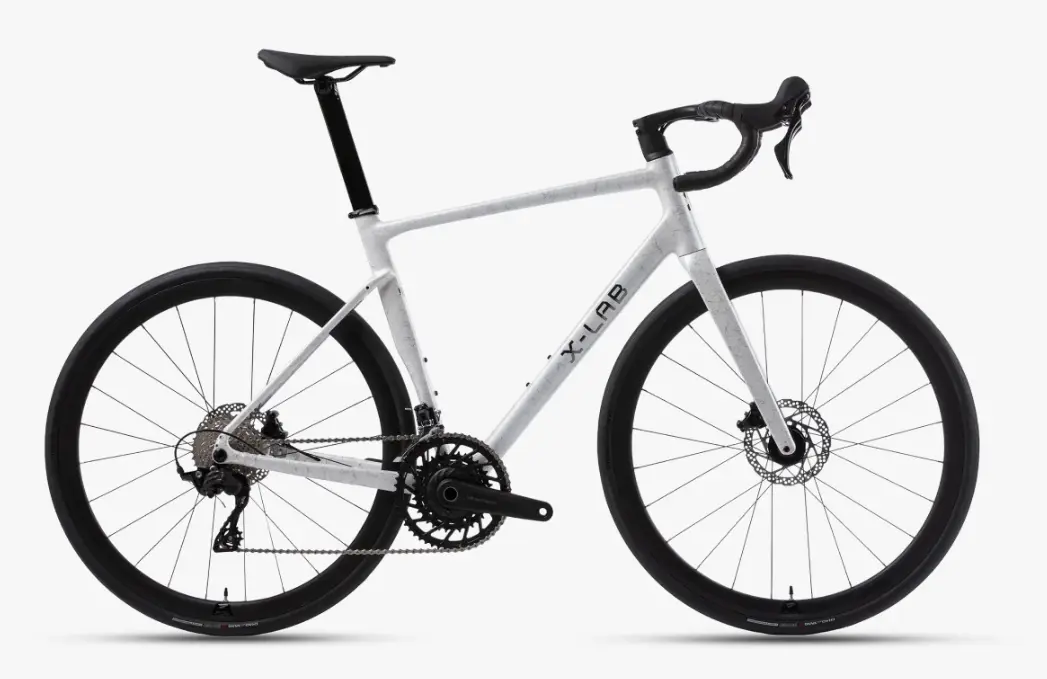
Photo: XDS / X-Lab
The RS7 is an all-road carbon bike with an integrated cockpit, Shimano 105 mechanical, 32mm tire clearance, and a $2,099 price. The RS5 steps down to an alloy frame with a carbon fork, Shimano Cues 2×11, and 38mm tire clearance at $1,399. Both include Branta power meter cranksets, which is an unusual spec at these prices. Neither is particularly exciting compared to the headline models, but they round out a complete product family.
The Vertical Integration Play
The pricing only makes sense when you understand what XDS is doing structurally. Most bike brands buy their frames from contract manufacturers (often in China or Taiwan), then source components from Shimano or SRAM, wheels from various suppliers, and cockpits from another vendor. Each handoff adds margin.
XDS manufactures its own frames, its own Branta carbon wheels (including the aero-spoke C50 ULR that ships on the AD9), its own cockpits and handlebars, and its own power meter cranksets. It’s also folding in Apple Find My anti-theft technology into the crankset, which is a genuinely clever value-add. When a brand controls this much of its own supply chain, the savings can either go into their margin or into the bike’s spec. X-Lab is, at least on paper, passing them to the buyer.
Whether that vertical integration compromises anything — carbon quality, wheel durability, component support — is the legitimate open question. Toray T1100 is real material. Branta wheels are an unknown quantity compared to something like a Zipp 303 or DT Swiss ARC. That’s not a reason to write them off; it’s a reason to wait for long-term reviews before going all-in.
What We Don’t Know
Honest take: there are real unknowns here that any reasonable buyer should weigh.
Availability and support are the biggest ones. X-Lab launched in the US, Norway, Japan, Australia, and twelve other markets in April 2026 — that’s a wide net to cast at once. How that service network actually functions when something needs warranty attention is unproven. Jenson USA is an authorized US retailer, which helps, but this isn’t the same as having a Trek or Specialized dealer network within driving distance for most people.
Resale value is genuinely unknown. Established brands carry secondhand market premiums built over years. An X-Lab AD9 in two years is harder to price because there’s no established comparison. If you buy it intending to keep it long-term, that’s less relevant. If you tend to flip bikes, it matters.
Long-term durability of the Branta wheels and proprietary cockpit is also an open question. The integrated system is elegant until something breaks and the replacement part has a three-week shipping window from Shenzhen.
The Actual Question
Are these bikes worth considering? Yes — selectively.
The AD8 at $4,499 with carbon aero frame and 105 Di2 electronic shifting is hard to match from Western brands at that price. The AD9 frameset at $3,751 is competitive against anything on the market if you’re planning a custom build. The GT8 gravel spec is compelling for what it costs.
The RT9 climber is the wildcard. If the claimed weight is accurate and third-party testing bears it out, it’s a genuine competitor in the ultralight category at a price that doesn’t require a second mortgage. If the weight is soft, it’s just expensive.
What X-Lab represents more broadly is the inevitable: Chinese manufacturing capability, which has underpinned the global bike industry for decades, is now showing up as Chinese brand identity in the pro peloton. Whether XDS and X-Lab have the support infrastructure and long-term brand staying power to match their current product quality is a question that will get answered over the next few seasons.
For now, the bikes look real. The prices are genuinely competitive. And the AD9 is literally racing at the Giro d’Italia as you read this.
X-Lab bikes are available in the US through Jenson USA and directly at xds.co. The AD9 frameset starts at $3,751; complete AD9 with Dura-Ace Di2 is $7,999.