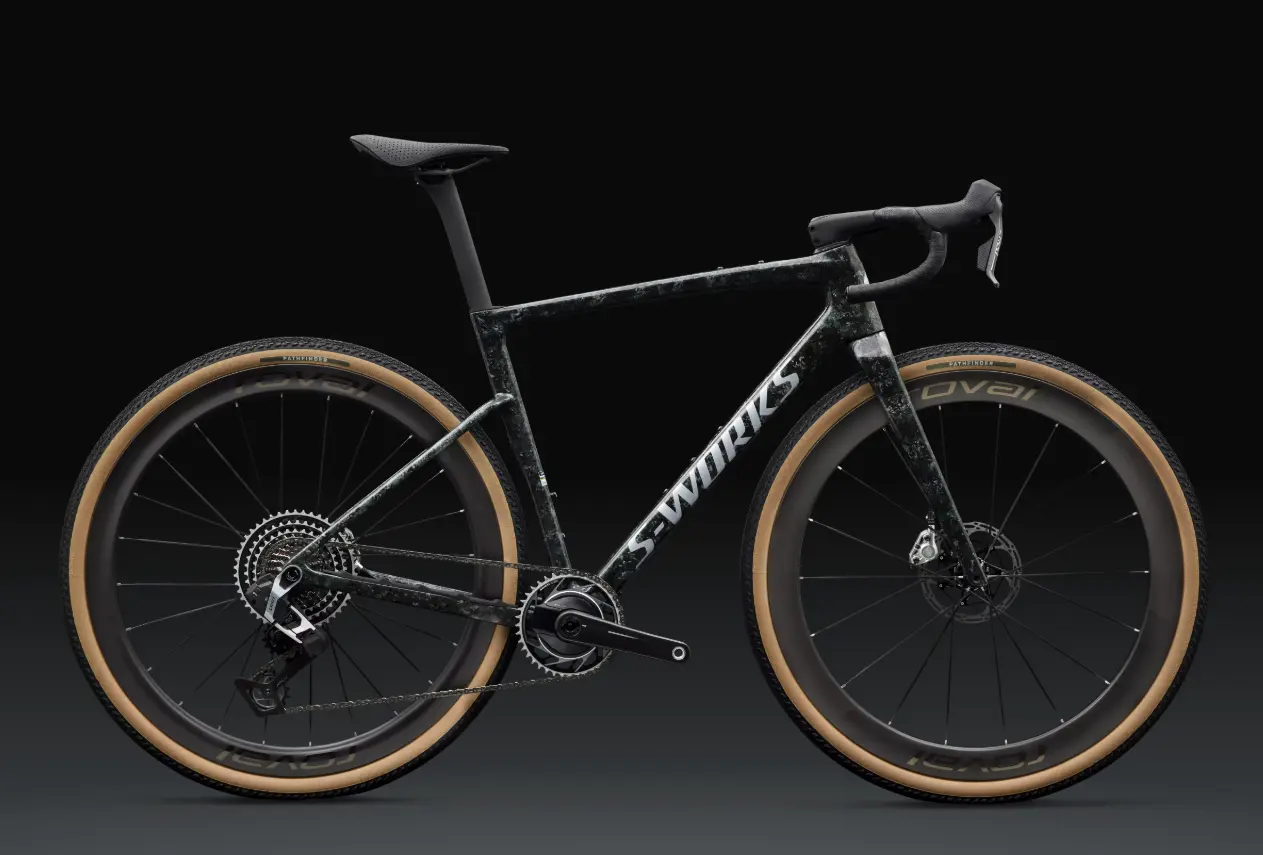
Let’s be honest: nobody should be surprised by the Crux 5. The moment gravel racing started generating real prize money, media deals, and WorldTour-level athlete contracts, the clock started ticking on the genre’s “just ride your bike” ethos. Aero gravel bikes were inevitable. The only question was who’d get there first and how far they’d go.
Specialized went pretty far.
The Purists Will Complain. They’re Also Wrong.
Every time a bike category gets serious, the same conversation happens. Road cyclists complained when aero road bikes replaced round tubes. XC mountain bikers complained when 29ers replaced 26-inch wheels. Gravel riders are now complaining that the Crux 5 looks too much like a Tarmac. And just like those previous arguments, the complaints will fade once people start seeing finish times.
Once money enters a sport, athletes will chase every legal advantage available. That’s not cynicism — that’s just how competition works. If a reshaped tube profile saves 15 watts and potentially 10 minutes over 200 miles, a sponsored racer running the old bike is leaving results on the table. The Crux 5 is the logical endpoint of gravel racing becoming a real sport, and I think that’s actually worth celebrating even if it makes the bikes less romantically scruffy.
The Crux 4 was a great bike. The Crux 5 will be faster. Those two things can both be true.
The Aero Seatpost Problem Nobody Is Talking About
Here’s where I’ll push back on the direction things are heading, though. The Crux 5 ships with an aero seatpost — integrated into the Terra cockpit system, shaped for minimal drag. And that’s fine for now. But that aero seatpost is fundamentally incompatible with a dropper post.
This might not matter much today. Most gravel racers still run straight posts, and the courses at events like Unbound or Gralloch don’t demand the kind of repeated technical descending where a dropper becomes genuinely useful. But gravel courses are getting harder. Race organizers keep adding more elevation, more singletrack, more technical terrain to differentiate their events and push the athletes. That trajectory points toward a future where a dropper post on a gravel bike stops being a novelty and starts being a real performance tool.
XC mountain biking went through exactly this. For years, XC racers ran rigid posts because the courses didn’t demand otherwise and because the weight penalty wasn’t worth it. Then courses got more technical, and suddenly everyone was running droppers — even at the elite level. The bikes adapted. The performance followed.
I’m not saying the Crux 5 needs a dropper post today. But locking the platform into an aero seatpost now potentially forecloses that option later, and I think that’s a tradeoff worth naming out loud even if it doesn’t matter for the next few seasons.
55mm Is the New Standard, Whether Brands Admit It or Not
The other thing the Crux 5 does is effectively set a new floor for what serious gravel clearance looks like. 47mm — what the Crux 4 ran — already felt tight on some courses. The Crux 5 goes to 55mm, and the Diverge 4 goes to 50mm. Every brand watching this launch is now doing math on their next-generation gravel frames.
I’d expect 50mm to become the minimum acceptable clearance on any new gravel race bike within the next two years, with 55mm becoming the target for anything positioned at the performance end. Bikes still shipping with 40mm clearance are going to feel dated fast. That’s not a knock on those bikes — it’s just where the category is going.
UDH is already table stakes on anything above entry level, and that’s a good thing. 55mm clearance is about to become the same kind of baseline expectation. Brands that don’t get there on their next platform revision are going to have a harder sell at the performance end of the market.
The Bottom Line
The Crux 5 is a great bike. It’s the right bike for where gravel racing is in 2026. The aero gains are real, the weight is impressive, and the tire clearance finally matches what the fastest courses actually demand. If you’re racing seriously, this is the direction the sport is going and the Crux 5 is ahead of most of the field.
But it’s also worth watching how the dropper post conversation evolves over the next few seasons. The aero seatpost is faster right now on current courses. Whether it’s still the right call when courses get harder is a question nobody can answer yet — but it’s the kind of decision that’s a lot easier to make on a new platform than to retrofit later.
The evolution was inevitable. The tradeoffs are real. And 55mm is the new 40mm.