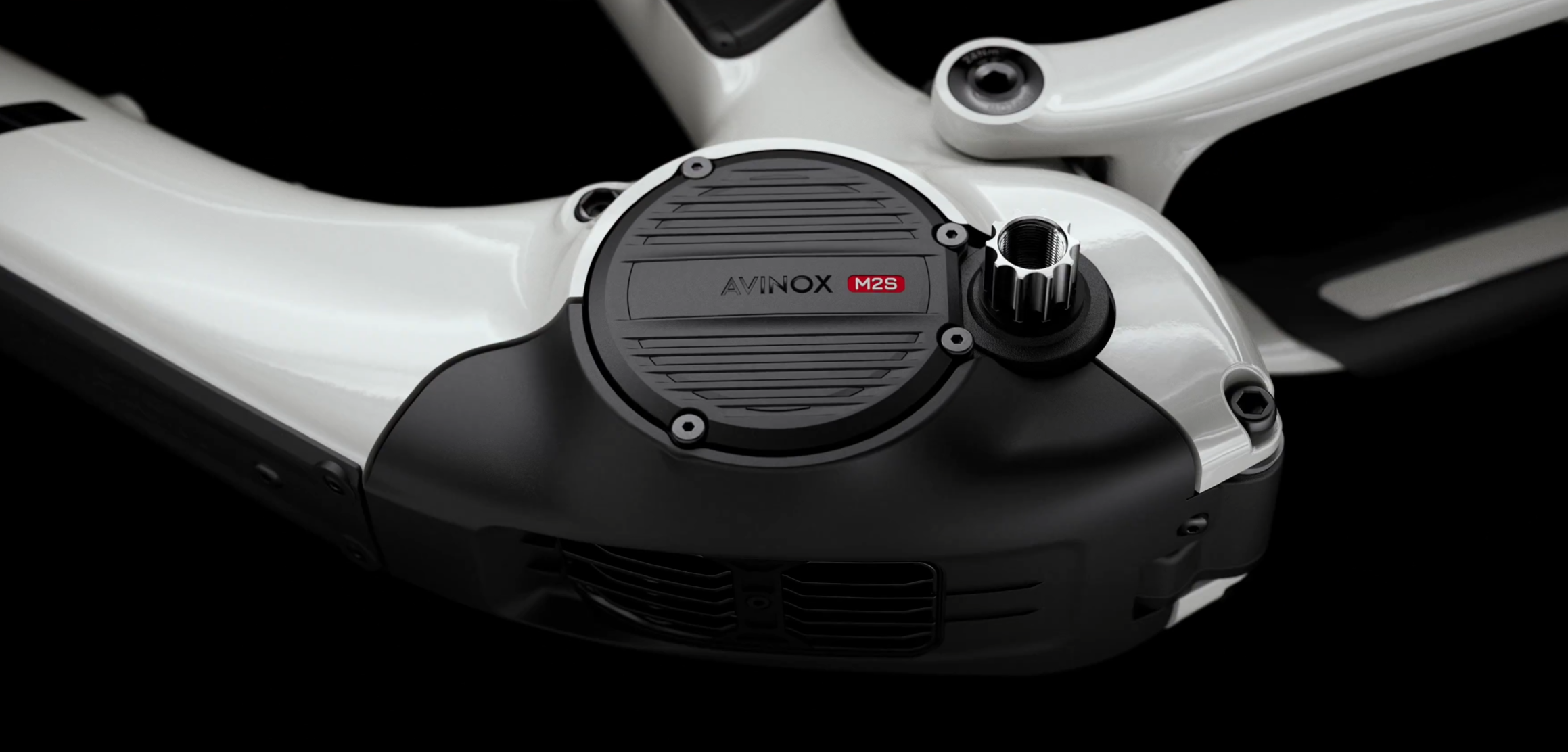
The Avinox motor story has moved fast. DJI’s ebike division launched the M1 in 2025 and immediately made Bosch and Shimano look like they were playing a different game. Now the second generation is here — the M2 and M2S — and the number of bikes built around these motors has exploded. Over 60 brands have signed on, which means the hard part isn’t finding an Avinox bike anymore. It’s figuring out which one is actually right for you.
This guide breaks it down by budget and use case, covering both the flagship M2S and the more accessible M2.
M2S vs. M2: Which Motor Do You Actually Need?
Before we get into the bikes, it’s worth understanding what you’re actually buying between the two motors.
The M2S is the flagship, delivering up to 1,500W and 150Nm of torque. The M2 sits in the mid-range at 1,100W and 125Nm peak — both up from the M1’s 1,000W and 120Nm.
New temperature sensors paired with a heat-dissipating gearing design reduce both motors’ tendency to overheat — a real-world improvement that matters on long climbs.
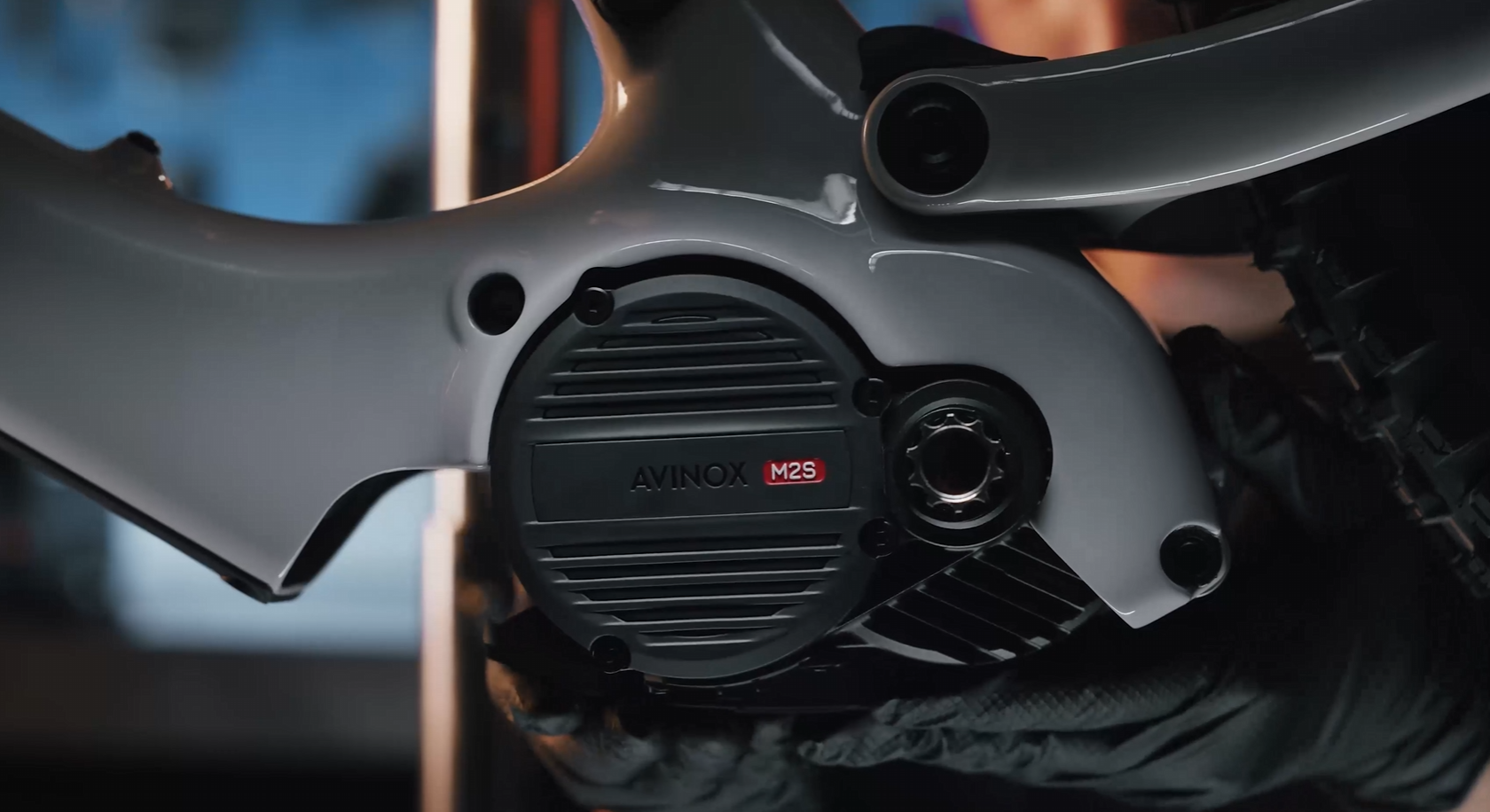
Avinox M2S motor. Image: Amflow
The honest answer for most riders: the M2 is probably enough. For context, e-bike motors are generally considered “full power” at 85Nm and 600W. The M2 more than doubles that. The M2S is for riders who want the absolute ceiling — steep, technical, shuttle-free riding where every watt counts — or who just don’t want to compromise.
Budget-wise, the M2 is your ticket into the ecosystem without spending flagship money. The M2S commands a premium, but as you’ll see below, that premium varies a lot by brand.
Best Value: Amflow PR Carbon (~$5,000)
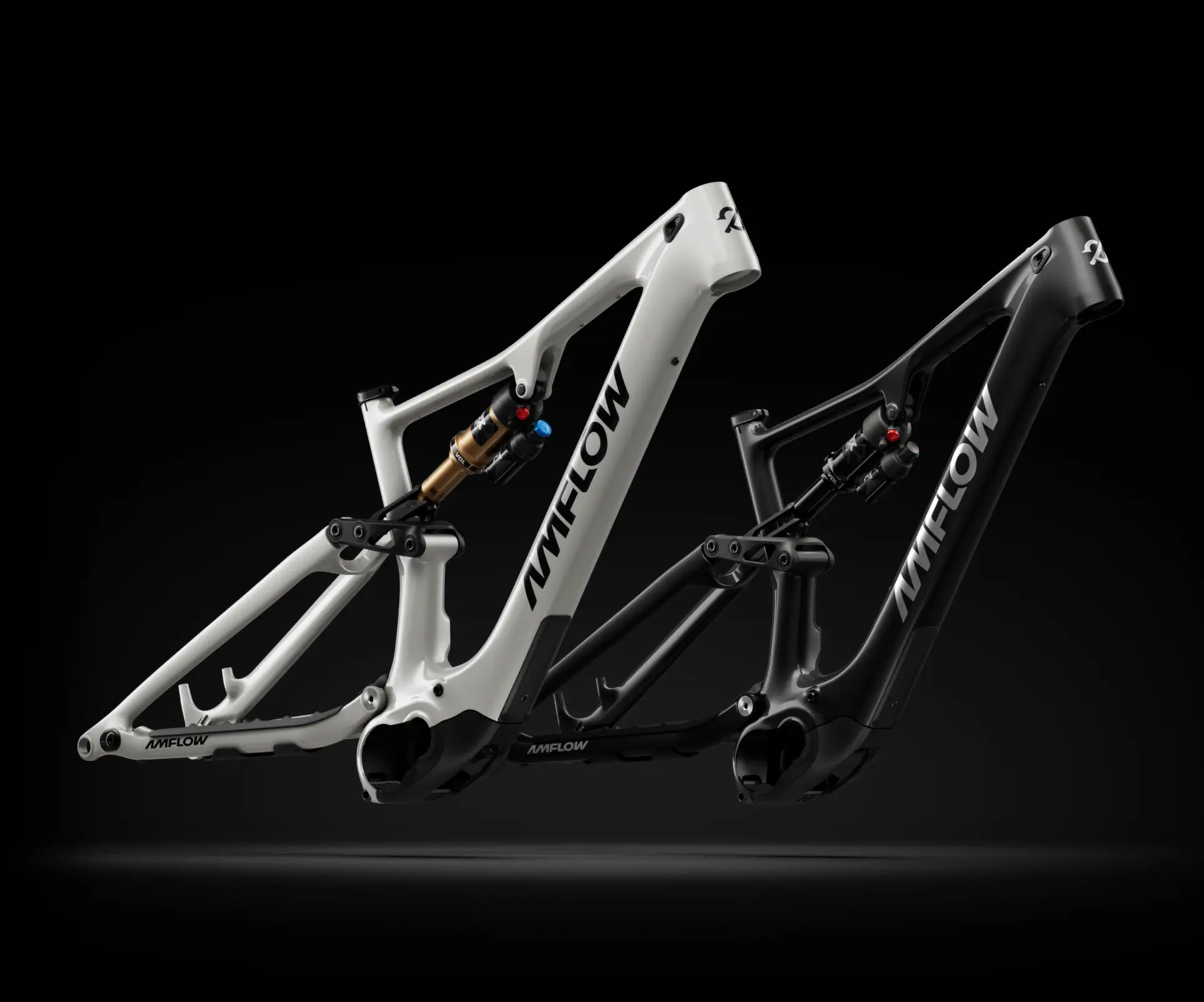
Amflow PX (white) and PR (black) carbon frames. Image: Amflow
If you want into the Avinox ecosystem at the lowest price point, the Amflow PR Carbon is where you start. The PR Carbon comes with the M2 motor at $5,000, with Fox Performance suspension and a removable 800Wh battery. The removable battery is a genuinely useful feature — you can pull it for indoor charging rather than running a cable to your garage.
Amflow is DJI’s own brand, so there’s no markup for a third-party OEM relationship. You’re getting the motor manufacturer’s own bike, which means tight software integration and a direct support chain. The tradeoff is that it’s not a brand with decades of trail geometry refinement behind it. But at this price point for a full-carbon Avinox bike, it’s hard to argue with.
Best for: Riders who want M2 performance without stretching to $7K+.
Best All-Rounder: Amflow PX Carbon Pro (~$10,200)
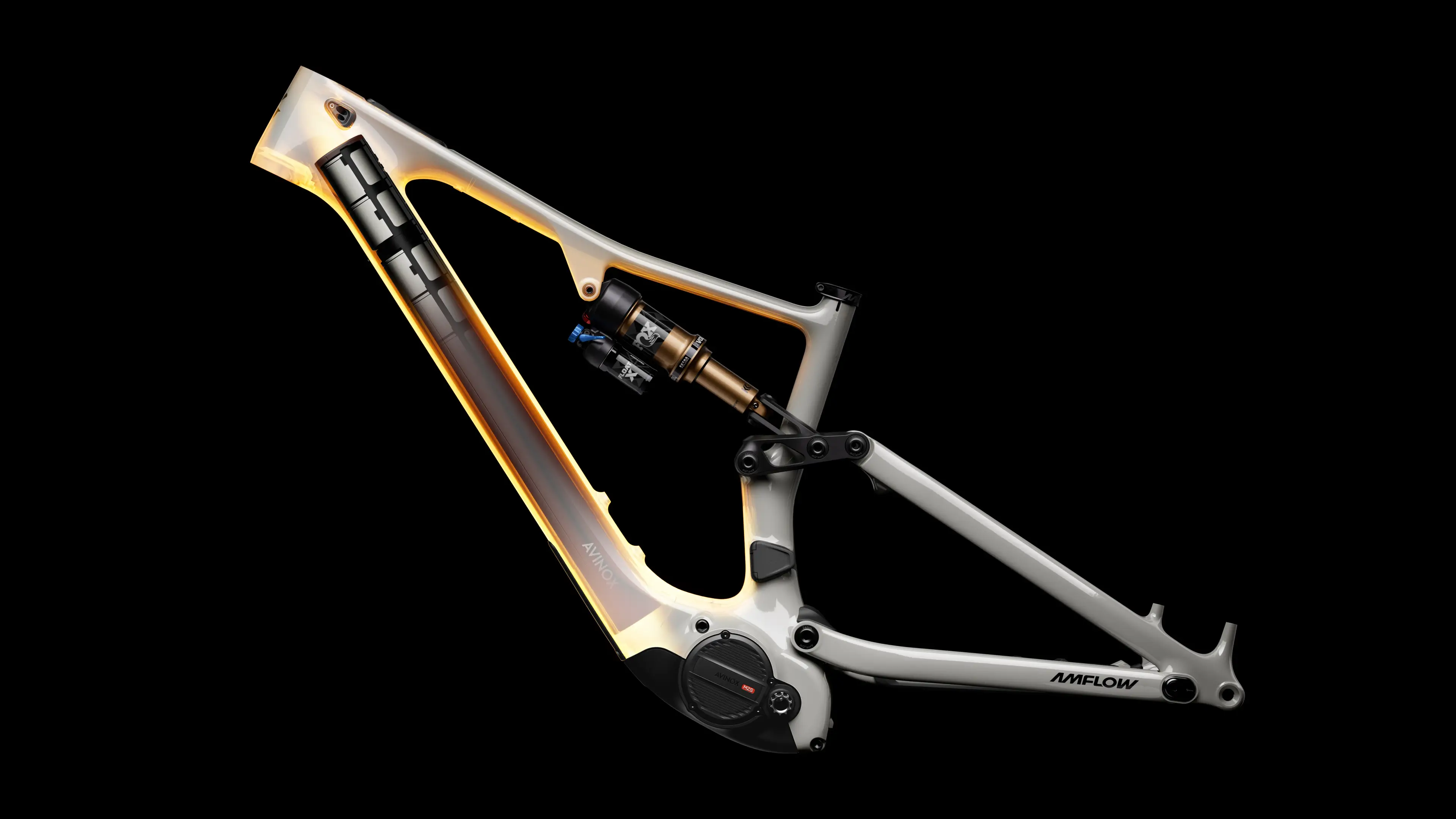
Amflow PX Carbon frame with integrated Avinox motor. Image: Amflow
Step up to the PX Carbon Pro and you get the full M2S treatment — 1,500W, 150Nm, Fox Factory suspension, SRAM X0 AXS drivetrain, and Amflow’s 700Wh integrated battery with best-in-class energy density. It launched out of stock across all sizes, which tells you something about demand.
The PX is lighter than the PR and uses the newer integrated battery format rather than the removable unit. If you’re not worried about charging convenience and want the absolute lightest Amflow, this is it.
Best for: Riders who want the full M2S experience from the motor manufacturer itself.
Best Alloy Option: Commencal Meta Power SX (~$7,500)
Commencal keeps it true to their style with an aluminum frame, available in five build options. The Meta Power SX was originally announced with the M1, and Commencal upgraded customers’ pre-orders to the M2S at delivery — which tells you something about how they run their business.
160mm of travel, MX mixed wheel sizing, and Commencal’s well-proven enduro geometry make this a bike you can actually ride hard without second-guessing the chassis. The alloy frame keeps costs down without compromising stiffness where it matters.
Best for: Riders who want proven enduro geometry and M2S power without paying carbon prices.
Best Mid-Range Carbon: Mondraker Zendit (from ~$8,000)
The Zendit combines the M2S motor with a carbon frame delivering 165mm of suspension travel, with three models starting at £7,399 and topping out at £10,999. Mondraker has been building carbon eMTBs for years and their geometry work is serious — the Zendit isn’t a parts-bin bike with a new motor slapped in. It was designed around the M2S from the ground up.
The mid-tier build hits the sweet spot between suspension quality and price. If you’re in the US, expect pricing in the $8,000–$9,000 range for the entry models.
Best for: Riders who want proven eMTB brand DNA with M2S power and a full carbon chassis.
Best Long-Travel Option: Whyte Karve EVO (from ~$7,000)
The Karve EVO is one of the longest-travel bikes announced with the M2S, with 180mm front and rear — built to be a serious self-shuttling machine. The carbon/alloy mixed frame keeps weight reasonable while the 800Wh battery and proportional geometry mean every size gets a properly fitting bike.
180mm of travel changes the mission statement. This isn’t a trail bike that can handle rough days — it’s a bike for riders who spend time in bike parks and on proper enduro tracks and want the motor to fill in what gravity doesn’t.
Best for: Bike park regulars and enduro-focused riders who want maximum travel.
Best Premium Option: Forbidden Druid E (from ~$12,700)
The Druid E comes in four tiers, all running Avinox motors — the top two with the M2S, the lower two with the M2 — paired with your choice of 600Wh or 800Wh battery. The Tier 1 build starts at $12,699 with Fox Podium Factory suspension, SRAM X0 T-Type AXS, and Crankbrothers Synthesis Carbon wheels.
What makes the Druid E stand out isn’t the spec — it’s the chassis. Forbidden is one of the few brands that builds truly proportionally sized eMTBs, meaning smaller riders get geometry that actually fits rather than a scaled-down version of a large frame.
Best for: Riders who want top-shelf suspension engineering and are willing to pay for it.
Best All-Rounder: YT Decoy X (~$10,500)
The Decoy X uses a hydroformed alloy frame with 170mm front travel and 160mm rear, the M2S motor, and an 800Wh battery. Available in five sizes from S to XXL — which sounds like table stakes but isn’t. First-gen Avinox bikes couldn’t fit an 800Wh battery in smaller frames. That’s fixed here.
The launch edition spec is loaded — Fox Podium fork, SRAM X0 Transmission, Maven brakes, DT Swiss wheels. YT has always been good at delivering strong specs at their price point, and the Decoy X continues that.
Best for: Riders who want a well-rounded mullet enduro bike with no obvious weak points.
Who’s Not Playing Along (Yet)
Worth noting: notable holdouts include Norco, Yeti, Trek, Specialized, Rocky Mountain, Transition, and Santa Cruz. That’s not automatically a problem — those motors still work well and have deep trail-tested refinement. But if your shortlist includes brands from that group, factor in that you’re working with motors in a different performance tier.
The Bottom Line
The M2/M2S launch has given eMTB buyers a genuinely wide range of options at every price point, from $5K carbon bikes up to $13K flagship builds. The motor itself is no longer the differentiator — they all have the power. What you’re actually choosing between is chassis geometry, suspension quality, battery configuration, and brand support.
Pick the motor based on how you ride. Pick the bike based on everything else.