
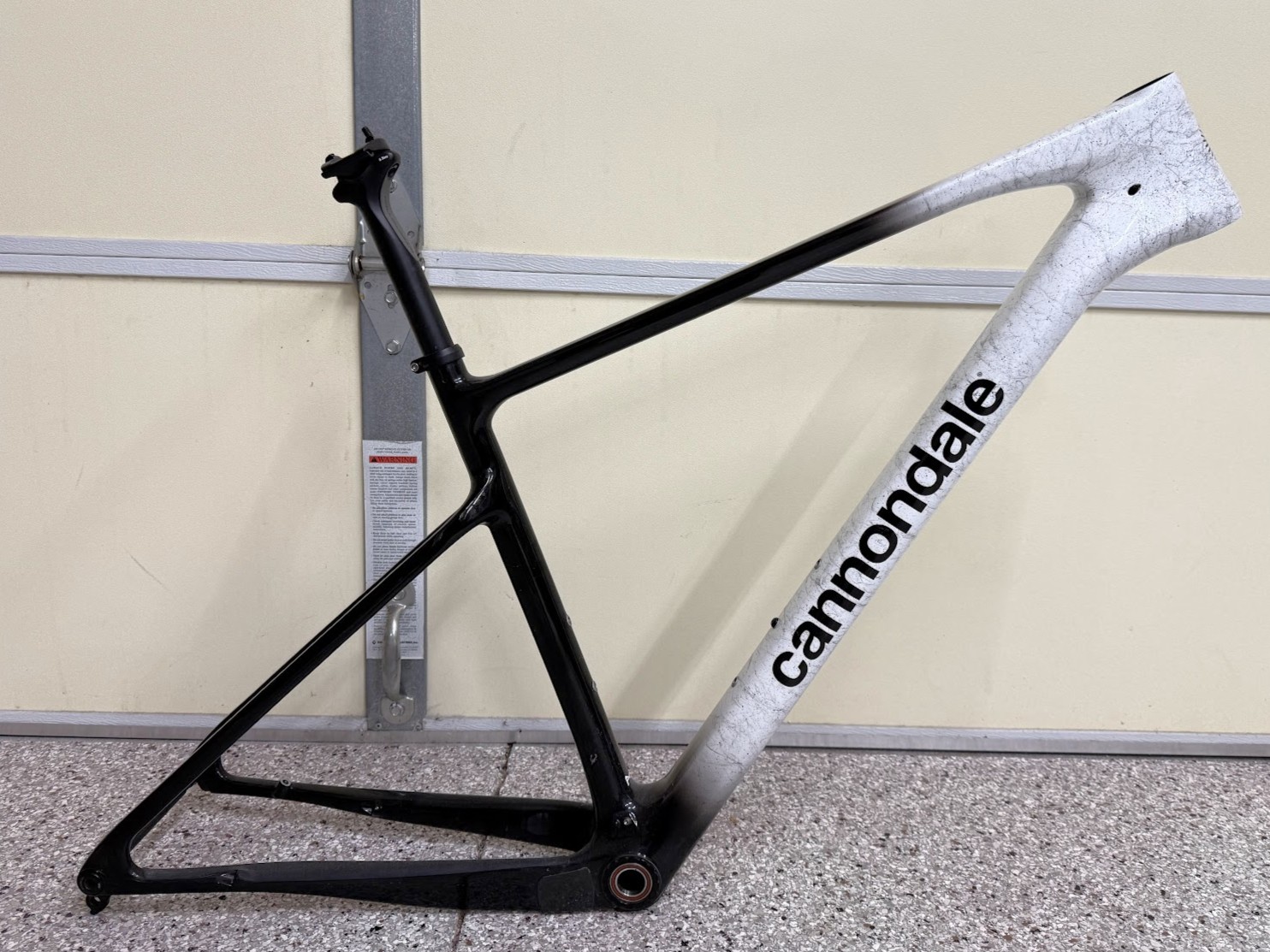
Hardtail gravel bike conversion
Gravel bikes are all the rage—but what if you already have a capable hardtail mountain bike frame sitting in your garage? That’s the question I asked before starting a hardtail gravel bike conversion using a Cannondale Scalpel HT.
Spoiler: with the right parts, it might be better than a dedicated gravel frame—especially for mixed terrain, chunkier fire roads, or long-distance bikepacking.
Why Convert a Hardtail to a Gravel Bike?
The Cannondale Scalpel HT is a lightweight, progressive XC race hardtail, and it turns out to be an ideal platform for a hardtail gravel bike conversion. Here’s why:
- Huge tire clearance: You can easily run anything from traditional 700x45c gravel tires to full 29x2.2" slick MTB tires.
- Modern geometry: The longer reach and slacker head tube make it more stable on descents than many traditional gravel bikes.
- Fork flexibility: Run a 100mm suspension fork or go rigid for weight savings.
- UDH-compatible: This frame supports SRAM Transmission and future drivetrain upgrades.
- More comfort and control: Wider tires + MTB geometry = better ride on rough terrain.
And here’s the kicker—many elite gravel racers like Dylan Johnson are already running lightweight MTB tires (like the Continental Race King 29x2.2) in races like Unbound Gravel. He’s done wind tunnel testing and field testing and concluded that wider MTB tires reduce rolling resistance and improve durability—making them a smart choice for real-world gravel conditions.
So if the pros are choosing MTB tires, why not build around a frame that was made for them?
Why I’m Ditching Suspension: ENVE Mountain Fork Upgrade
For this build, I’m replacing the suspension fork with a rigid carbon ENVE Mountain Fork. It fits perfectly into the Scalpel HT’s Boost spacing and tapered head tube, and it’s a dream setup for a hardtail gravel bike conversion.
ENVE Mountain Fork Specs:
- Weight: ~719g with axle
- Axle-to-Crown: 490mm (maintains stock geo)
- Mounts: Triple accessory mounts on each leg
- Clearance: Fits up to 29 x 3.0" tires
- Brake: Post mount, up to 180mm rotors
The rigid fork makes the front end lighter, more efficient, and visually cleaner—ideal for gravel, bikepacking, and long mixed-surface days.
Flat Bar or Drop Bar? Two Build Options
Option 1: Flat Bar Gravel
This is the simpler option, and it makes sense for riders who want more control and an MTB-style cockpit. Great for singletrack, fire roads, and adventure riding.
- Keep your MTB controls and brakes
- Add bar-ends for extra positions
- More upright and stable riding posture
Option 2: Drop Bar Conversion
If you’re looking for better aerodynamics, more hand positions, and a “true gravel bike” feel, a drop bar conversion with SRAM AXS is the way to go.
- Use Force/Red AXS shifters with a GX Eagle AXS rear derailleur
- Short stem + flared drop bars to preserve stability
- Best for races and long road/gravel routes
SRAM’s wireless ecosystem makes it easy to mix MTB and road components—a huge plus for a hardtail gravel bike conversion.
The Tire Choice Makes the Bike
Gravel is all about tires, and your options really open up when you build on an MTB frame. You get more volume, more comfort, and better grip—all with similar or better rolling resistance compared to narrow 40mm gravel tires.
Top Lightweight, Fast-Rolling Tire Picks:
TireSizeWeight****NotesContinental Race King ProTection29x2.2"~605gDylan Johnson’s go-to for gravel racingSchwalbe Thunder Burt29x2.1–2.25"~525–600gAlmost slick; insanely fast on dry hardpackMaxxis Receptor29x2.0"~625gGravel/XC hybrid tire with great rolling speed
These tires give you the speed and smoothness of gravel tires, with the grip and comfort of MTB rubber. Perfect match for this build.
My Cannondale Scalpel HT Gravel Build
- Frame: Cannondale Scalpel HT (UDH-compatible)
- Fork: ENVE Carbon Rigid Fork
- Drivetrain: SRAM AXS (GX Eagle + Force mix)
- Cockpit: Flat bar now; drop bar upgrade later
- Tires: Race King 2.2" or Thunder Burt 2.25"
- Wheels: Lightweight 29" carbon wheels, tubeless setup
I’m starting with a flat bar build for more technical gravel and trail, but I may switch to a drop bar setup for smoother events or longer races.
Why Do a Hardtail Gravel Bike Conversion at All?
If you’re gravel-curious and already have a hardtail—or just want something more capable than a twitchy gravel frame—a hardtail gravel bike conversion gives you versatility, performance, and durability all in one.
It might not be as sleek on tarmac, but it absolutely crushes rough gravel, long rides, and multi-day adventures. And with the ability to mix road and MTB drivetrains, the build possibilities are endless.
Want to follow this build?
Check out my updates, ride tests, and gear breakdowns on @mizubikes YouTube. You’ll see how this hardtail gravel bike conversion turns out in real-world gravel and trail conditions.